

Psalm 107:12
not by might nor power

Wilt not thou, O God, who hast cast us off? and wilt not thou, O God, go forth with our armies? (Psalm 107:12 DR)
St. Paul is known as a man of great faith who suffered many hardships, many of which he recounts in 2 Corinthians 11:24-27. However, the one suffering which he describes with seemingly more concern is a more personal one, the famous sting of my flesh which he describes as coming after a vision of heaven:
And lest the greatness of the revelations should exalt me, there was given me a sting of my flesh, an angel of Satan, to buffet me. For which thing thrice I besought the Lord, that it might depart from me. (2 Corinthians 12:7-8 DR)
It’s not known exactly what this sting was, and he seems to be unwilling to describe it, probably to avoid some sort of false self-glorification. But while he describes what might be considered more extreme sufferings just verses earlier, this one seems more personal and more painful, as he describes beseeching God three times to remove it. I’ve always assumed the three times indicates a superlative like holy holy holy which would mean it was something he was in constant distress about.
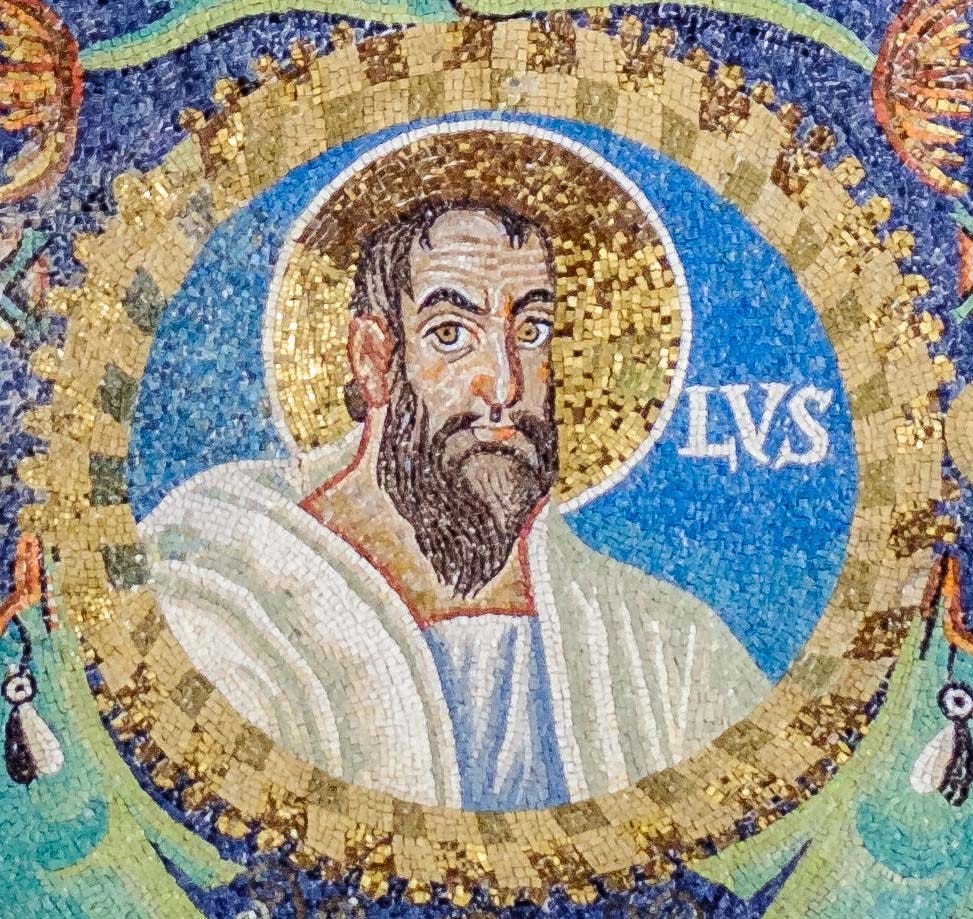

Yet the suffering is not removed, and the answer is “My grace is sufficient for thee; for power is made perfect in infirmity.” (2 Corinthians 12:9 DR). To which St. Paul submits his will and comments on his acceptance of suffering that “when I am weak, then am I powerful.” (2 Corinthians 12:10 DR)
The Psalmist in this verse faces a similar dilemma. The nations compass the holy city about, the ancient foes have not been subjugated and oppress on every side. The cry therefore goes out—why has God abandoned us? Will you go out with our armies again?
The question here seems to imply a yes, that God will indeed forgive and return to his people and fight for them. However, some commentators take the opposite approach. St. Augustine reads this in conjunction with the following verse as implying a definite no as the verse is applied mystically to the church, especially of the martyrs:
This thing then You will not do, You will not march forth in our powers, but within You will work...The world is to rage, the world is to tread us down, there is to be a heap of witnesses, built of the spilled blood of martyrs… By not marching forth in the powers of them, did He not the more lead down the Church even unto Idumæa, lead down the Church even unto the city of standing around? For if the Church chose to war and to use the sword, She would seem to be fighting for life present: but because she was despising life present, therefore there was made a heap of witness for the life that shall be. (St. Augustine, Expositions on the Psalms, 59, 13.)
In a similar manner St. Robert Bellarmine comments:
He answers a question by asking another. Nobody can possibly bring us into the strongholds of the Idumeans, but you, “O God, who hast cast us off.” “And wilt not thou, O God, go out with our armies?” If you do, we must needs conquer; without your help, we will be the conquered. (St. Robert Bellarmine, A Commentary on the Book of Psalms 59, 10.)
On the historical level the nation of Israel never fully subdued Edom; the prophet Obadiah— prophesying long after the time of David— is still proclaiming doom upon Edom, even after the kingdom of Israel has been torn in two. But on the mystical level the Church subdues Edom in another way, through the preaching of the Gospel and the witness of the martyrs. In a final irony, the children of Israel become a type of Edom, looking forward to their final conversion and the consummation of the Psalmist’s cry:
The kingdom of Juda means the Church, the Sichemites or Samaritans mean its enemies, who will, with great trouble, but with great certainty, be ultimately subdued. Ephraim and Manasses, typify the schismatics, inasmuch as Jeroboam drew them off from Jerusalem and the temple, and set up another altar; and they too will, at a fitting time, be subdued. The Idumeans are the type of the Jews, the last to submit, like the Jews, who, however, in the end will be brought to Christ. (ibid, 59, 9.)
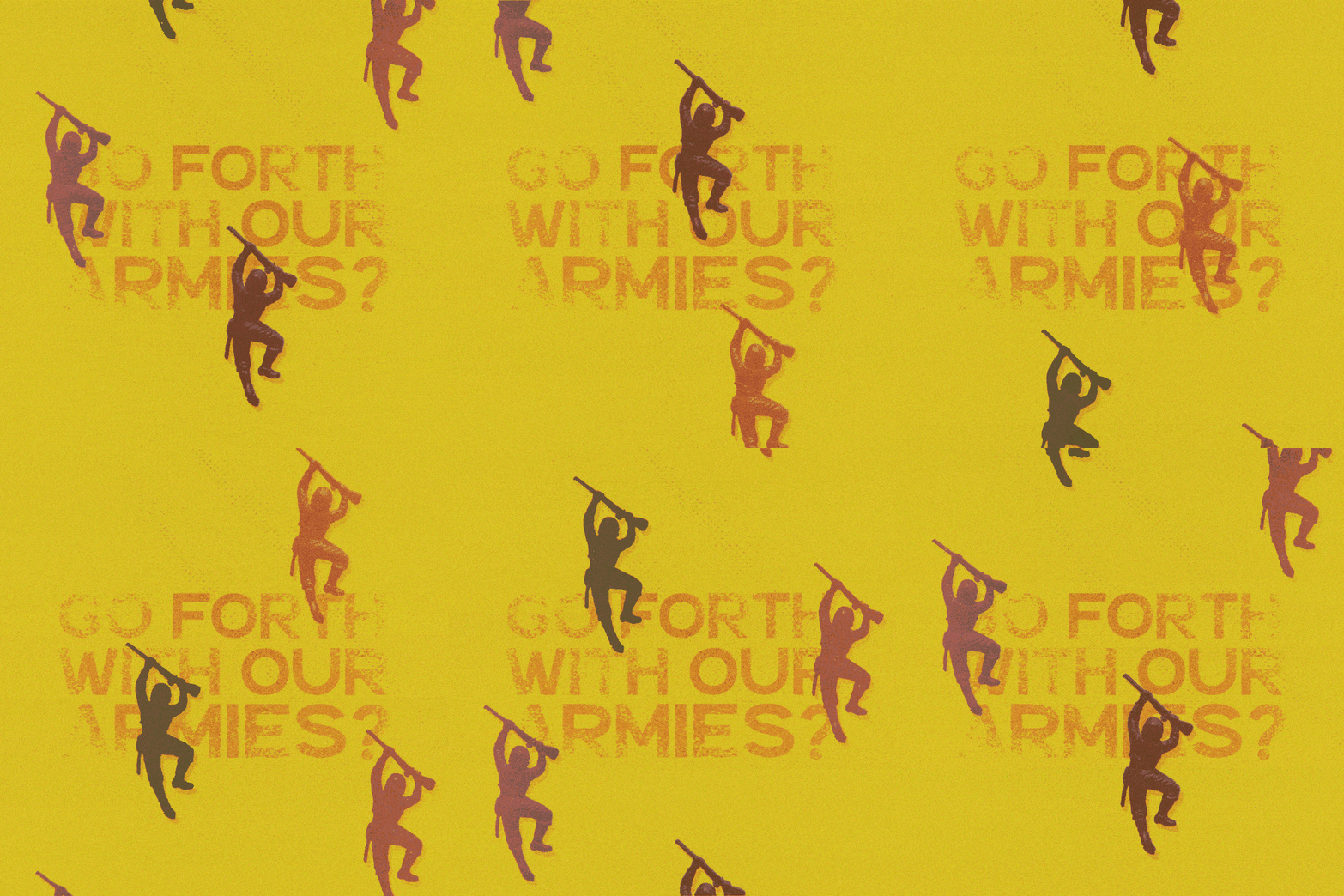
I took a very literal approach with this animation, and found an image of those plastic toy soldiers that I used to play with when I was a kid. I remember staging large scale battles with my brother between green and tan. Good times.
When I first created this I did not have in mind some of the commentary mentioned above, but I think the imagery was ambiguous enough to allow for a wide latitude of interpretations. I did, however, go back and add a simple question mark to the text so as to follow more closely the commentary above. Anachronistic? Absolutely.
At any rate, I cutout the soldier figure in Photoshop and brought it into After Effects. I animated the soldier movements and then precomped the soldier; this makes it way easier to reposition multiple versions of the same precomp without worrying about messing up the keyframes. I then repositioned various copies, offset their timing and added various tints to make differentiate them. Pretty simple.
Enjoy.
Wilt not thou, O God, who hast cast us off?
and wilt not thou, O God, go forth with our armies?
(Psalm 107:12 DR)
View a higher quality version of this gif here: