

Psalm 140:4
stop that, stop hissing in my ear
Incline not my heart to evil words; to make excuses in sins. With men that work iniquity: and I will not communicate with the choicest of them. (Psalm 140:4 DR)
The human capacity for self-deception is well-nigh infinite, matched only by the concomitant capacity for self-justification. While in every other matter we may be unsophisticated, when it comes to justifying our actions we can out-Sophist Protagoras himself. As an aside, it is unintentionally mirthful that the root of sophistication is sophist; the former word was originally meant pejoratively but now means someone who is cultured or superior or has intelligent and persuasive arguments. Language often damns with faint praise.
The Psalmist takes stock of himself and recognizes his own ability for self-deception and self-justification; the prayer he wishes to offer to God can too often be an admixture of sincerity and dubious motives, especially when it comes time for confession of sins. While some are overly scrupulous and attempt to squeeze sin out of a stone, so to speak, generally speaking we as a species are far more inclined to make excuses for our sins or justify them in some way. Whether circumstances or motives or other’s actions, we are quite crafty at pointing the finger anywhere but at ourselves.
Neither is this a new phenomenon, as it was perfected at the occasion of the first sin when our first parents paved that road to perdition:
And he said to him: And who hath told thee that thou wast naked, but that thou hast eaten of the tree whereof I commanded thee that thou shouldst not eat? And Adam said: The woman, whom thou gavest me to be my companion, gave me of the tree, and I did eat. And the Lord God said to the woman: Why hast thou done this? And she answered: The serpent deceived me, and I did eat. (Genesis 3:11-13 DR)
One fascinating aspect of this passage is that yes, both Adam and Eve pass the blame to someone else for their sins, but they are also being truthful about it. After all, Eve did give the fruit to Adam to eat, and Eve was deceived by the serpent. And God did give Eve to Adam as a companion. The confession is thus true but is being done in a third-person sort of way; they acknowledge the action that occurred but without acknowledging the role of their wills in the commission of the act.
This is what the Psalmist wishes to avoid, to make excuses in sins. To do so is like going to the doctor and not telling him what ails you, so that he might effect a treatment or cure:
His third petition is… that God may give us the grace to make a free confession of our sins, for fear, by representing ourselves in a state of perfect health, we may prevent our heavenly physician from curing us. “Incline not my heart to evil words.” Do not allow us, when we shall have fallen into sin, to let our heart incline to lies and excuses. (St. Robert Bellarmine, A Commentary on the Book of the Psalms, 140, 4.)
The first half of this verse and the previous two verses of this Psalm are used at the Incensing before the Consecration at High Mass, the idea being (among other things) that if our prayers are to be offered in purity to God as incense, we must be purified from our sins which entails a sincere confession. The prayer which follows is asking that the charity of God may be enkindled in us, which follows from being cleansed of our sins.
The Psalmist also recognizes that to associate with those who will lead him into temptation can be a near occasion of sin, and thus determines to reject their company so as to not fall into their ways. As we saw in the narrative of the Fall, Eve associated with the serpent and was lured by his words into sin, instead of rejecting his company. Adam as head of their family did not step on the serpent or remove his wife from the situation, and thus complied with the temptation.
We cannot always avoid these types of situations and associations, but when we can we must do so. St. Paul reminds the Corinthians: “Be not seduced: Evil communications corrupt good manners” (1 Corinthians 15:33). This is often colloquially rendered: “Bad company corrupts good character.” The friends we associate with will have an impact on us, often without us realizing it. We can get de-sensitized to the gravity of certain things and are more able to justify ourselves. As bad actions become normalized to us in the midst of our associations we can more easily assign them less gravity or even begin to justify them as good things. This can happen so subtly that we stop hearing the forked tongue hissing in our ear for what it is.
The Psalmist notes that this temptation is especially strong in that the choicest of them are often those who make the temptation the hardest to resist. By this is meant not the random friends or associates we may have but those who we or the world deem to be most desirous of emulating or associating with. In our own time this often takes the form of celebrity, and we see all too often how people do things they may not otherwise do because a celebrity or an influencer makes it seem attractive. This can range from the stupid and the innocuous to the most depraved, which is why the ancient serpent is so desirous of using such an effective weapon against us.
This is where the virtues of humility and piety are so important. In humility we recognize in true confession our sinfulness before God and our need of him, while also shunning the need for human respect. In piety we desire to love God above all the things of this world and to reject the world the flesh and the devil in favor of living as He commands us.
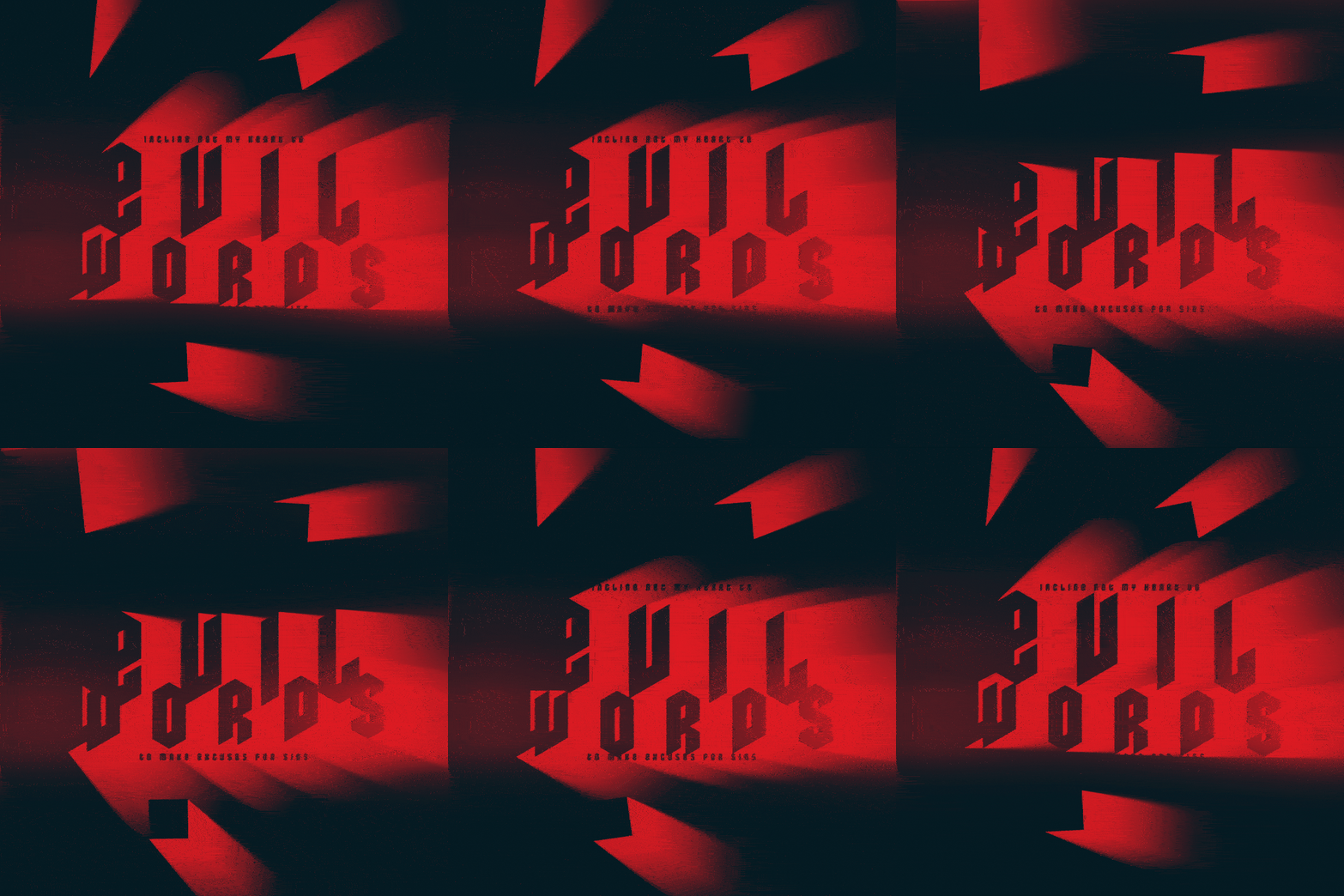
This animation was super simple. I set up the text in the composition and then broke the words into individual letters. I added a simple looping Y position animation on each and then offset them in time. I also added in some random squares within the composition and set their position and rotation properties to looping wiggle.
I then precomped all those elements and applied Shadow Studio 3 to the precomp. All the elements were black and the background was black, so I changed the shadow color to be red to get a nice inverted, unsettled kind of look. I then animated the source point in another simple looping Y position animation to get the shadows to have some variation.
That’s it.
Enjoy.
Incline not my heart to evil words; to make excuses in sins. With men that work iniquity: and I will not communicate with the choicest of them.
(Psalm 140:4 DR)
View a higher quality version of this gif here: