

Psalm 18:2
incessant praise

The heavens shew forth the glory of God, and the firmament declareth the work of his hands. (Psalm 18:2 DR)
In St. John’s vision of the throne in Apocalypse, he sees four beasts who incessantly worship the Lord:
And in the sight of the throne was, as it were, a sea of glass like to crystal; and in the midst of the throne, and round about the throne, were four living creatures, full of eyes before and behind.
And the first living creature was like a lion: and the second living creature like a calf: and the third living creature, having the face, as it were, of a man: and the fourth living creature was like an eagle flying.
And the four living creatures had each of them six wings; and round about and within they are full of eyes. And they rested not day and night, saying: Holy, holy, holy, Lord God Almighty, who was, and who is, and who is to come. (Apocalypse 4:6-9 DR)
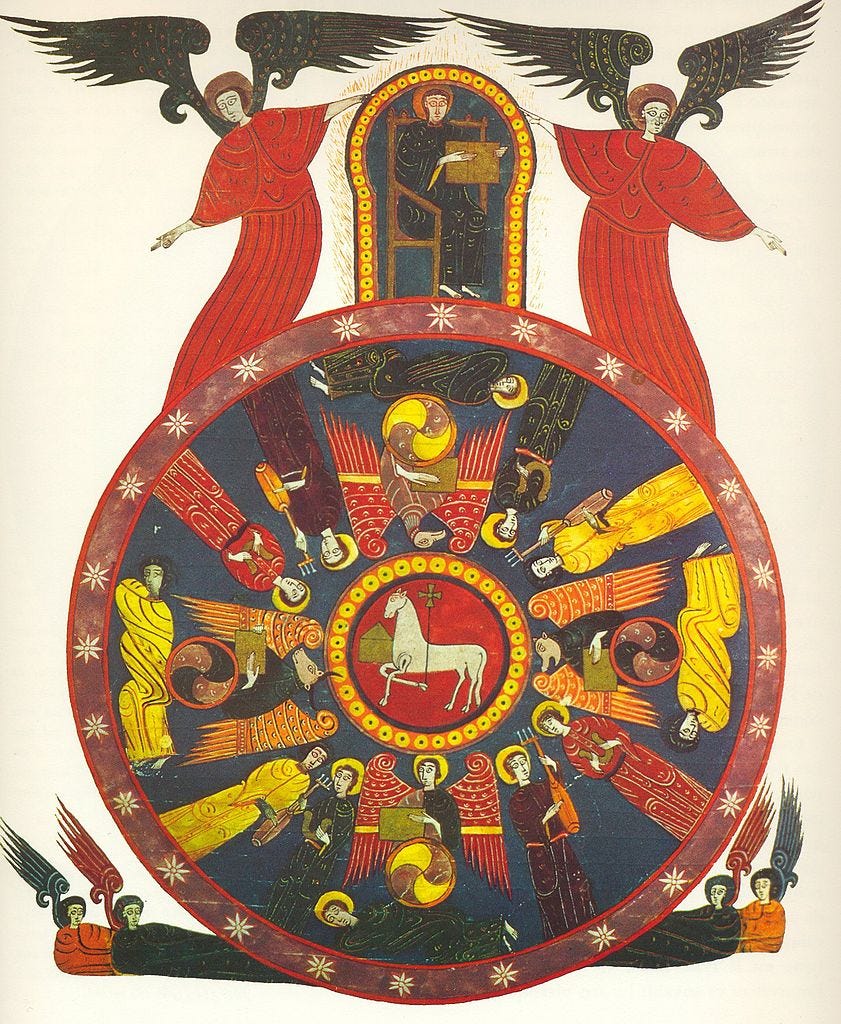
Granted, the imagery is evocative and mysterious, which although rooted in the apocalyptic language of the prophets (cf. Ezekiel 28:12-15), is nevertheless to some sense inscrutable. But what had always struck me was the line about how they rested not, day and night, saying…
I always wondered about this from a human perspective; how could this be possible? And wouldn’t it be incredibly boring and monotonous? Sure, these are angelic beings-cherubim to be specific—but what would such an existence entail?
But as I’ve pondered this more seriously and deeply, there is a profound truth found with.
The cherubim are the penultimate order in the hierarchy of angelic beings. Their very name signifies nearness, the word a borrowing of the Assyrian kirubu whose etymology literally means to be near in the sense of the personal bodyguards or servants of the king. Cherubim were the angels set to guard the Garden of Eden after the fall (Genesis 3:24), were the figures on the Ark of the Covenant (Exodus 25:18-21), and embroidered on the veil in the Tabernacle (Exodus 26:31), among other references. Satan was also of this order of angelic beings.
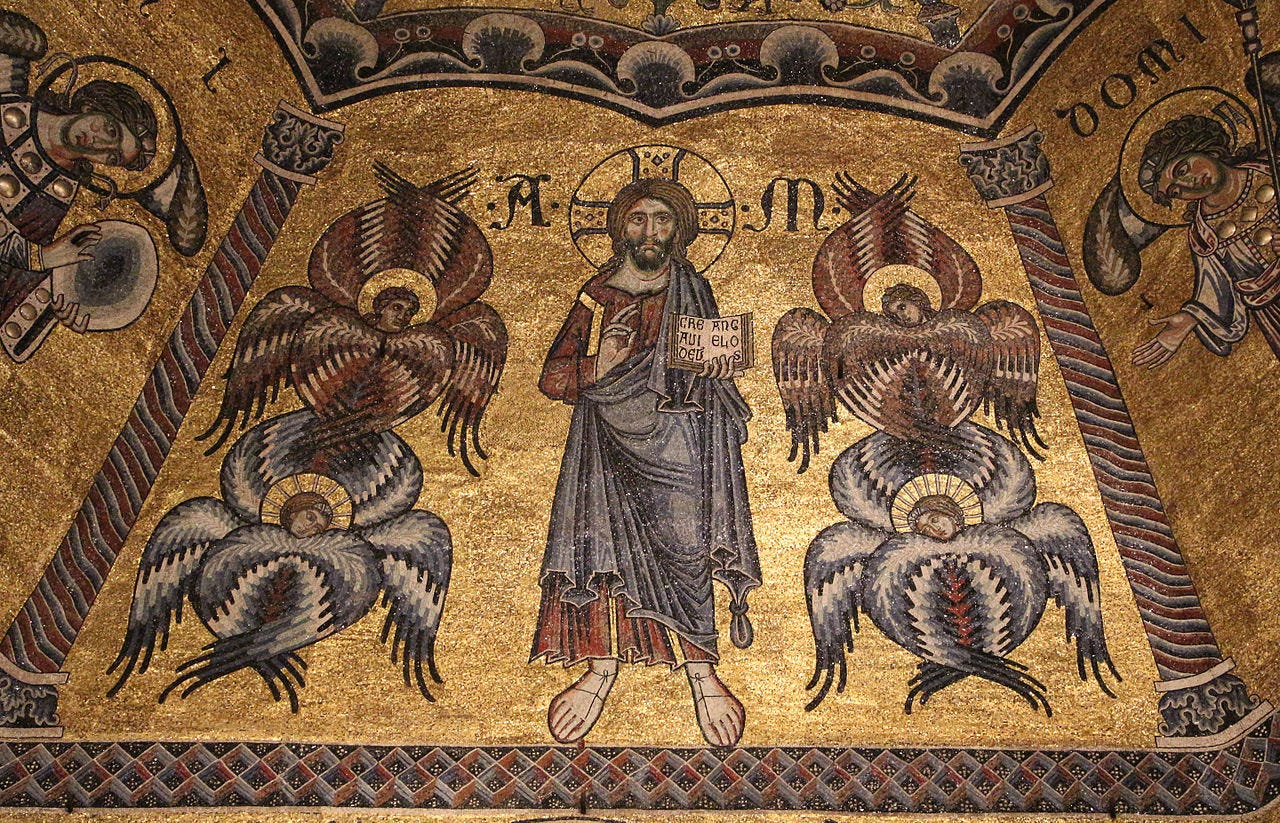
Pope St. Gregory—following the hierarchy of Dionysius—says that
…cherubim means “the fulness of knowledge, and these most sublime hosts are thus called, because they are filled with a knowledge which is the more perfect as they are allowed to behold the glory of God more closely.” (Pope St. Gregory, Hom. in Ev., xxxiv, 10.)
St. Augustine commenting on Psalm 79:2 says:
Cherubin is the seat of the glory of God, and is interpreted the fullness of knowledge. There God sits in the fullness of knowledge. (St. Augustine, Expositions on the Psalms, 79, 2.)
Understood in this sense, the ceaseless praise from the Cherubim becomes not only understandable, but also fitting. They praise endlessly because they know God to the fullest extent of their being. And although all the choirs of angels are meant to know God, the essence of the cherubim in some special way is to do this in an exceeding way. Just as the Seraphim are the burning ones who love God in an ineffably sublime manner, so the Cherubim know him. The knowledge and understanding forms the raison d'être of who and what they are; the fall of Satan and the diminutive effects shows that for them to know God is as essential to them as breathing is to us.
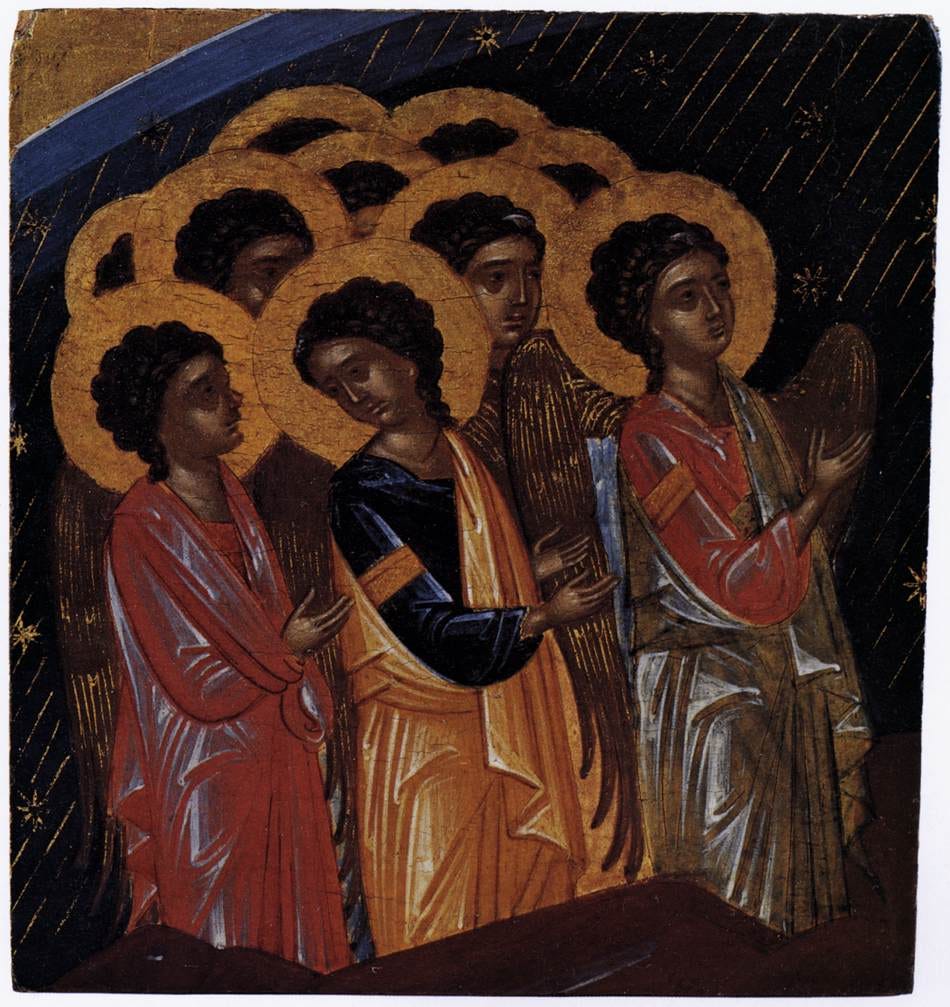
In this Psalm the Psalmist proclaims that the heavens themselves by their very existence praise God. Granted, the universe is not a rational being, but its very created nature as a creature is a testament to God’s handiwork and an endless proclamation of his glory. And while creation doesn’t know God, in an analogous material way it performs the function of the Cherubim for the physical order. St. Robert Bellarmine says:
This verse shows us how, for the heavens announce his glory day and night by the beauty of the sun in the day, and that of the stars by night; but as the days and nights pass away, and are succeeded by others, the Psalmist most beautifully and poetically imagines one day having performed his course, and spent it in announcing the glory of God, and then hands over the duty to the following day to do likewise; and so with the night, having done her part, gives in charge to the following night to do the same; and thus, “Day to day uttereth speech:” when its course has run, it warns the following to be ready, “And night to night indicates knowledge.” When the night too has finished her task of praising God, she warns the following to be ready for the duty; and thus, without intermission, without interruption, day and night fall in, and lead the choir in chanting the praises of their Creator. (St. Robert Bellarmine, A Commentary on the Psalms, 18, 2.)
Thus, just as the Cherubim lead the choir of the heavenly hosts in worship, so the heavens lead the choir of the physical created order in rendering adoration to its creator.
The upshot is that it is this closeness to God that brings about worship, this knowledge and understanding of him that can only be found in his presence. And since for us to know is to love, there is a necessity to draw near to God and to know him beyond an intellectual understanding. For the Cherubim their very being is a prayer of sorts, a perpetual communion with God in his infinite wonder. When we draw near to God in prayer—itself an act of love— we become like unto the Cherubim and take our place in the choir that gives homage and glory to God:
Though we understand the Cherubin to be the exalted powers and virtues of the heavens: yet, if you will, you will be Cherubin. For if Cherubin is the seat of God, hear what says the Scripture: The soul of a just man is the seat of wisdom. How, you say, shall I be the fullness of knowledge? Who shall fulfil this? You have the means of fulfilling it: The fullness of the Law is love. (Romans 13:10) (St. Augustine, Expositions on the Psalms, 79, 2.)
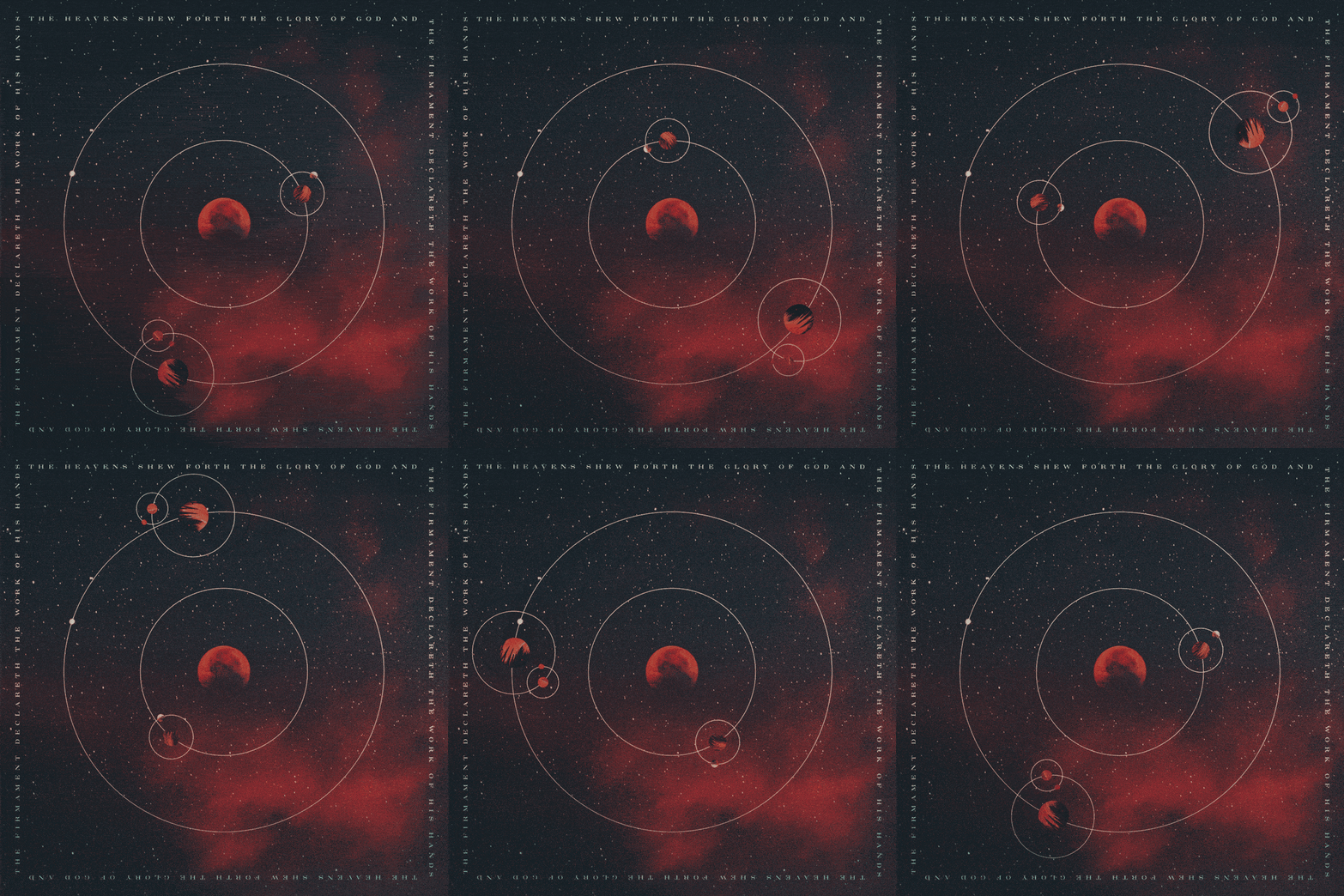
In this animation I was inspired by St. Robert Bellarmine’s reflection on how the universe itself—specifically the heavens—ceaselessly announce God’s glory in their movements and courses. I found a nice image of the moon (I think) on Unsplash to use as a basis.
Next I drew some orbits around the center celestial body and drew some more circles with other orbits. I found some nice textures and matted them to the circles to create more celestial bodies.
I then parented the main celestial bodies to the top level orbits and then the smaller ones to the secondary orbits and animated the rotation a full 360 degrees. A pretty simple animation but I think it has some elegance to it.
Enjoy.
The heavens shew forth the glory of God,
and the firmament declareth the work of his hands.
(Psalm 18:2 DR)
View a higher quality version of this gif here: