

Psalm 18:6
in the market for *real* estate
He hath set his tabernacle in the sun: and he, as a bridegroom coming out of his bride chamber, Hath rejoiced as a giant to run the way: (Psalm 18:6 DR)
In the opening chapters of the Genesis, God is spoken of as “walking in paradise at the afternoon air.” (Genesis 3:8 DR). In other words, as the heat of the day begins to turn to the coolness of the night. Part of the image here is of visitation; God obviously does not have a physical home, but in this passage the word picture is of God coming to fellowship with his creation, like a friend coming to visit at one’s house.
Further on in the Scriptures the Israelites are commanded to construct the Tabernacle after their liberation from Egypt. And although God’s presence filled this place (Exodus 40:34), it was not designed to be a permanent structure or “home,” as the people were journeying to the Promised Land.
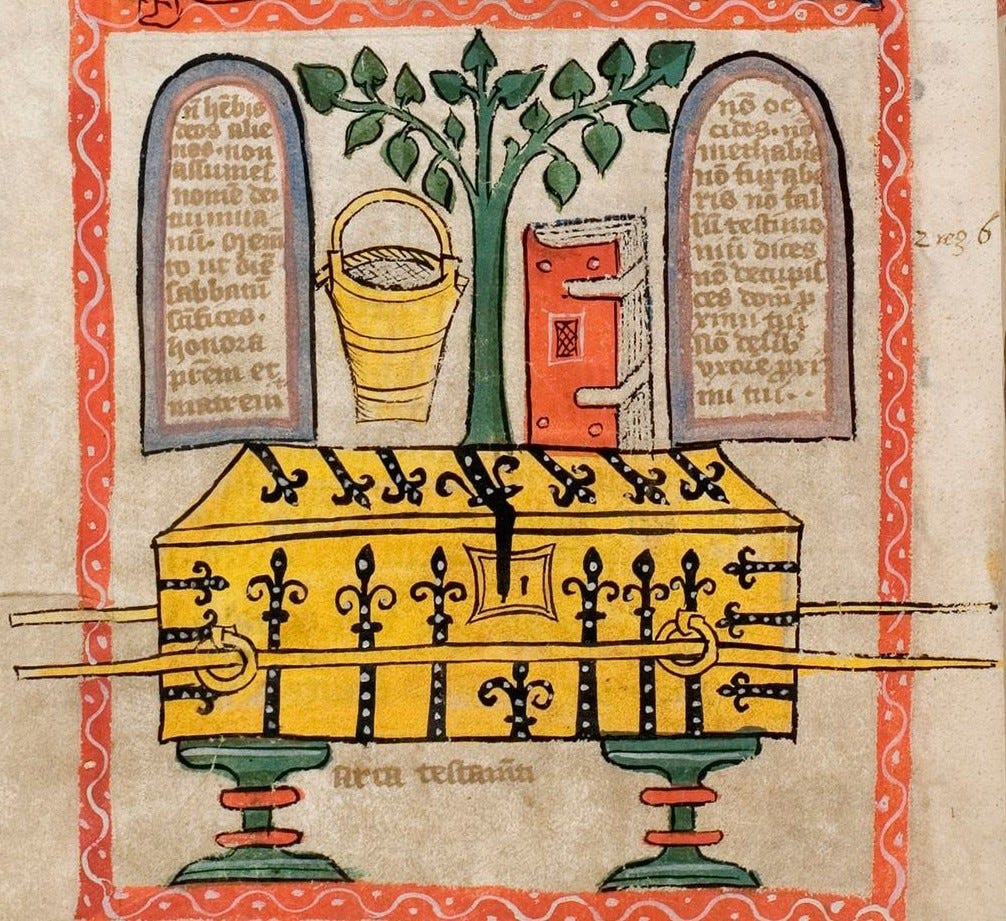
From the time of the Exodus to Solomon building the temple is almost 500 years, and in his dedication prayer Solomon describes the paradox of God dwelling anywhere:
The Lord said that he would dwell in a cloud. Building I have built a house for thy dwelling, to be thy most firm throne for ever... Is it then to be thought that God should indeed dwell upon earth? for if heaven, and the heavens of heavens cannot contain thee, how much less this house which I have built? (1 Kings 8:12-13; 27 DR)
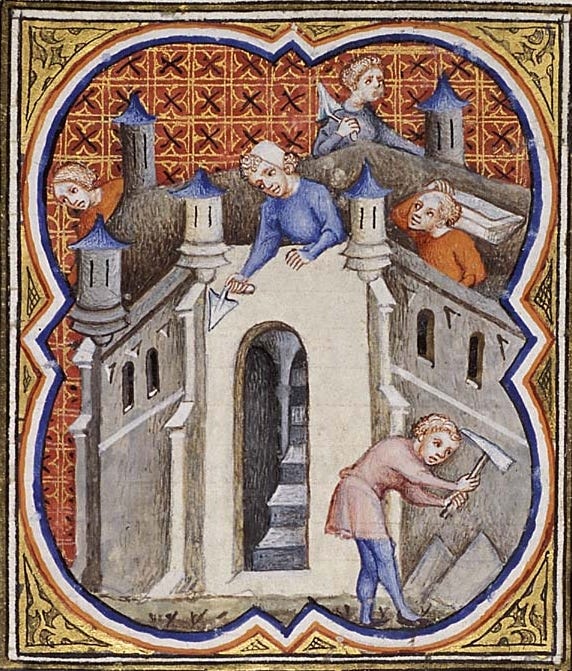
Years later Ezekiel has a vision of God’s glory leaving the temple, mounting upon the cherubim (the ones signified on the Ark of the Covenant and personified in this vision) and departing (Ezekiel 19). The second temple, though rebuilt, is not said to have contained the Shekinah (dwelling of God), most likely because the Ark of the Covenant was not in it (see 2 Maccabees 2), tying into Ezekiel’s vision and Jeremiah’s prophecy that one day:
And I will give you pastors according to my own heart, and they shall feed you with knowledge and doctrine. And when you shall be multiplied, and increase in the land in those days, saith the Lord, they shall say no more: The ark of the covenant of the Lord: neither shall it come upon the heart, neither shall they remember it, neither shall it be visited, neither shall that be done any more. (Jeremiah 3:15 DR)
St. John opens his Gospel with the famous verse:
And the Word was made flesh, and dwelt among us, (and we saw his glory, the glory as it were of the only begotten of the Father,) full of grace and truth. (John 1:14 DR)
There is a fascinating tie-in here, as the term for dwelt used in the original Greek is literally tabernacled, which John follows by speaking of seeing God’s glory in the Word who tabernacled among us, which is a clear means of alluding to Jesus Christ as the Shekinah; in the Incarnation God comes to dwell with his people again.
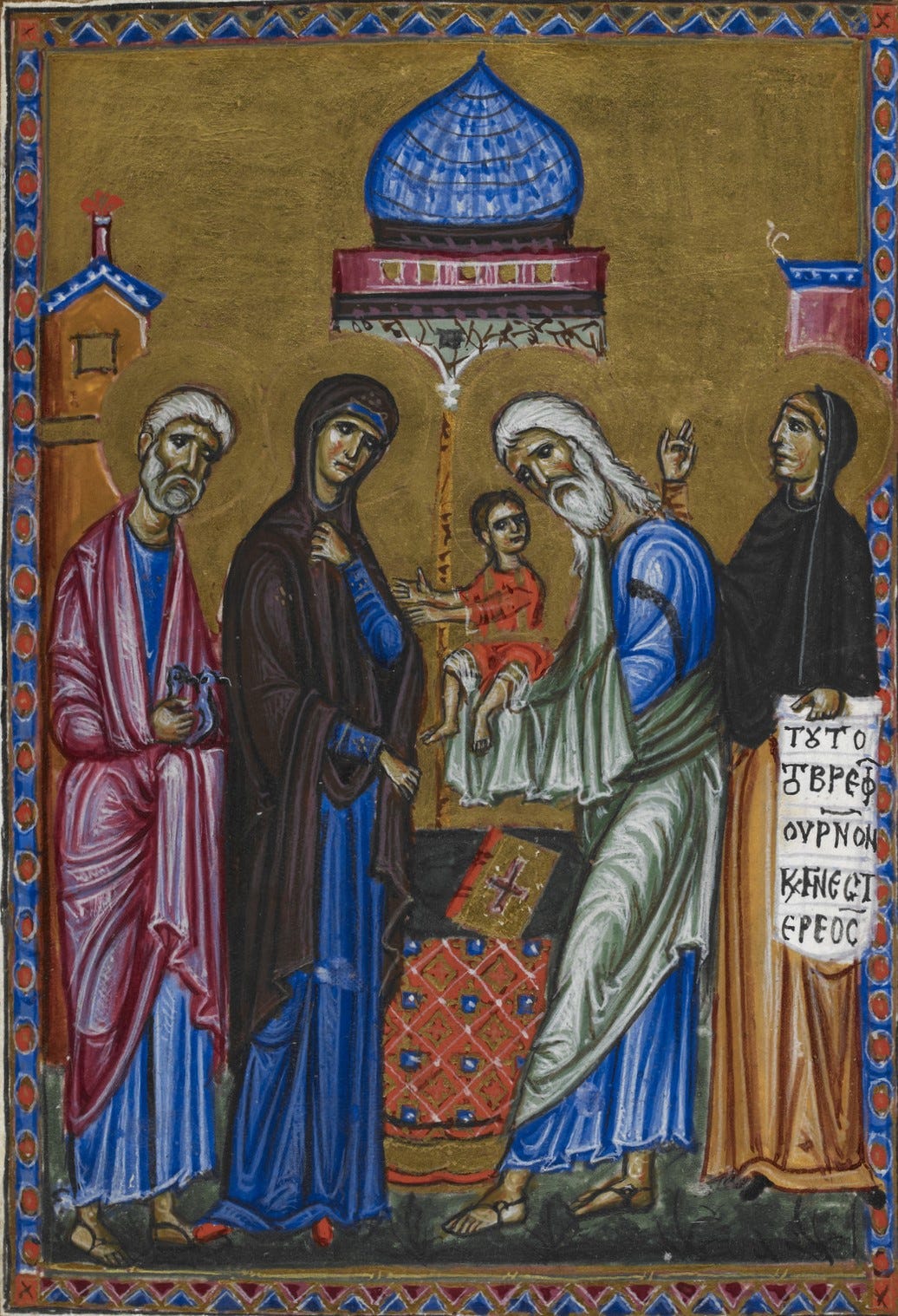
Finally in Apocalypse John sees a vision of the new Jerusalem, and hears a voice from the throne saying: Behold the tabernacle of God with men, and he will dwell with them. (Apocalypse 21:3 DR) He looks but doesn’t see a temple: For the Lord God Almighty is the temple thereof, and the Lamb. (Apocalypse 21:22 DR)
In this way the story of the Bible comes full circle, from God visiting his creation in the afternoon air to dwelling with them forever.
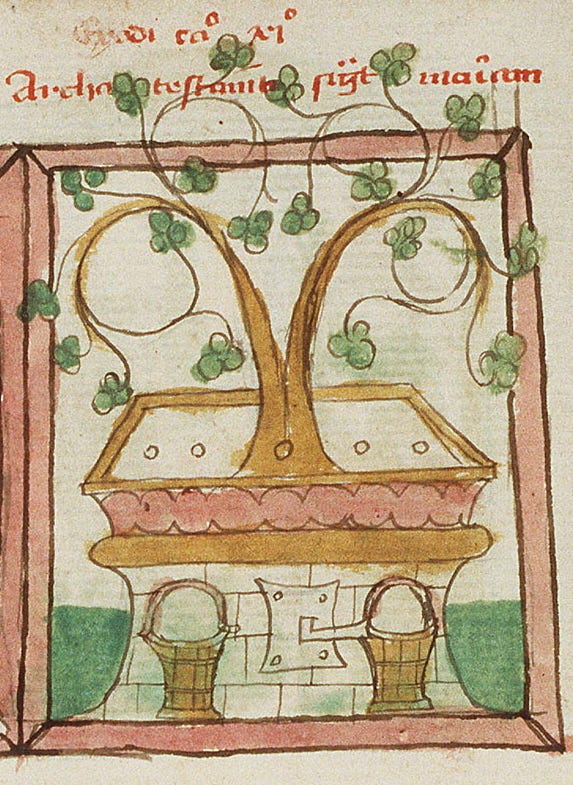
In this verse of Psalm 18 the Psalmist compares God’s tabernacle to the sun, as it were a temporary dwelling place like the Tabernacle of the old covenant. St. Robert Bellarmine comments:
He calls it a tabernacle, not a house, because he dwells there only for a while, during this short time of our peregrination, when we see him “Through a glass,” the glass of creatures, of which the sun is the principal. But when we shall come to our country, we shall see God, not “In his tabernacle in the sun,” but in his own home, the home of eternity. (St. Robert Bellarmine, A Commentary on the Psalms, 18, 5)
This sun, though magnificent and thus a fitting analogy for God’s dwelling, is not God’s true dwelling place. St. John seems to be alluding to this verse in Apocalypse where he compares the New Jerusalem to a bride adorned for her bridegroom:
And I John saw the holy city, the new Jerusalem, coming down out of heaven from God, prepared as a bride adorned for her husband. And I heard a great voice from the throne, saying: Behold the tabernacle of God with men, and he will dwell with them. And they shall be his people; and God himself with them shall be their God. (Apocalypse 21:2-3)
In the same manner the sun which the Psalmist envisages as God’s tabernacle is merely an analogy for the real thing to come:
And the city hath no need of the sun, nor of the moon, to shine in it. For the glory of God hath enlightened it, and the Lamb is the lamp thereof. (Apocalypse 21:23)
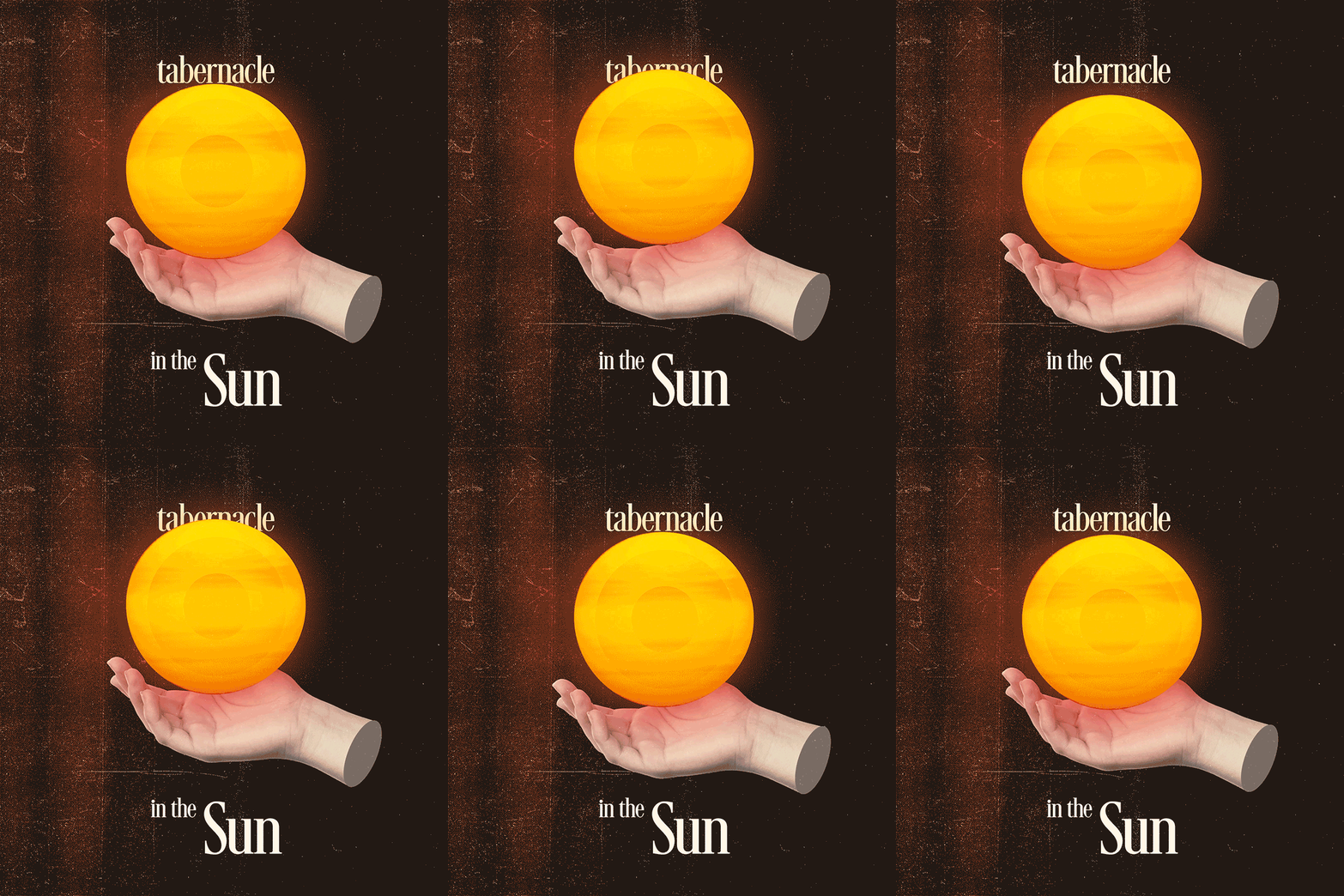
This animation was pretty simple. I cut out the hand in Photoshop and added some slight looping vertical animation combined with some slight rotation, each being somewhat offset to give it a more organic feel.
For the radiating sun I found a texture of the sun that was somewhat indistinct. I pre-comped that and matted it to a circle, animating the scale over a specified interval. I then duplicated that pre-comp multiple times and offset them in time to achieve the radiating effect. This is a pretty simple technique but one I like to use from time to time for these sorts of effects.
Enjoy.
He hath set his tabernacle in the sun:
and he, as a bridegroom coming out of his bride chamber,
Hath rejoiced as a giant to run the way:
(Psalm 18:6 DR)
View a higher quality version of this gif here: