

Psalm 21:6
mixes you can never unmix
They cried to thee, and they were saved: they trusted in thee, and were not confounded. (Psalm 21:6 DR)
What Cannot Be Undone
A fun gift to get for younger kids is a set of Play-Doh, since they love to make all kinds of things with it, especially if you have various tools like the Play-Doh scissors, forms and “cookie” cutters, and—of course—the pinnacle of all Play-Doh implements, the spaghetti maker. To be fair, the fragile plastic breaks after about the third use, but it’s still fun to make Play-Doh spaghetti.
One thing kids love to do with their Play-Doh is to mix the colors together. The adults recognize, however, that this is the end of the Play-Doh and means one will have to inevitably buy more, as the kids will naturally want certain colors, but have long since mingled them all together. And just as certain, there is no way to avoid this occurring. And once this happens, there is no unmingling. The conglomeration and confusion of colors creates these dull blobs that eventually get brittle and useful only as garbage fodder.
Meta-parallelism
The Psalmist now creates a sort of meta-parallelism with this passage and the previous one, reiterating many of the same themes and using similar words and tenses. The fathers of his people cried to the Lord, with clamaverunt being in the perfect tense and paralleling the use of speraverunt from both the previous passage and in the second clause of this one. Similarly, they were saved—salvi facti sunt—in the perfect passive mirrors [they] were not confounded—non sunt confusi— in the parallel clause.
Their action of crying to the Lord and hoping in the Lord is completed by them receiving salvation and being preserved from being confounded. In other words, their actions are met by God’s actions towards them, and the Psalmist rehearses these again as evidence of God’s faithfulness and salvation towards the righteous who call upon Him. Their hope is in the Lord, not in themselves, and thus they are far from the words of sins from the opening passage of this Psalm:
They cried unto You, and were saved. They cried unto You, not in the words of sins, from which salvation is far; and therefore were they saved. They hoped in You, and were not confounded. They hoped in You, and their hope did not deceive them. For they placed it not in themselves. (St. Augustine, Expositions on the Psalms, 21, Exposition 1, 6)
The Psalmist links the prayer or cry of the righteous with God saving them, and then links their hope or trust in God with them not being confounded. The term confusi comes from the word confundere, literally meaning with, together (con-) and to pour (fundere). The idea is of mingling different things together in such a way that they become mingled or—as the English cognate has it—confused. Much like stirring salt into water or mixing the colors of Play-Doh together, once they become confundo there is great difficulty in discerning or extracting the parts from the new conglomeration.
Confusing Confusion
This leads to the idea of confusion, which can be both in terms of disparate elements being mingled together, but also of an intellectual jumbling or perplexity. When we are confused in this sense it is because we find it difficult to separate what is true from what is false, what is better from what is worse, what logical inference leads where, etc.
In English both the term confused and confounded come from confundere, the latter originally being used more in the sense of something detestable or odious. To confound someone was to condemn or curse them, and thus there was a sense of imprecation or ruin to it. To be confounded was to be overthrown and left desolate or to be left in disorder, all of these meanings getting at the Latin root of things being mingled together.
Confused was originally much closer to the Latin meaning of things mingled together, and only took on the more modern notion of intellectual perplexity in the 1800’s. It also has largely taken over most of the senses and uses for which confound was used.
Avoiding Ruin
The fathers of whom the Psalmist speaks were thus not brought to ruin, but neither was their hope put to confusion, for in their distress they cried to the Lord and were saved. It is this rehearsal of God’s actions on their behalf which now leads to the confusion, for if He acted on their behalf then when they cried to Him, why not now when His own Son is the One Who offers up His prayer from the cross? There is within the Psalmist’s words a sense of confounding or confusion, for if hope lies unfulfilled of if the Lord does not hear the righteous when they cry to Him, then is there not a mingling of doubt with faith, a confusion of the way in which things should work? That is, if God acted towards the righteous in such a way in the past, then does not His failure to act in the same manner towards the righteous now either call into question His faithfulness or the righteousness of His Son?
It is thus understandable why the Psalmist uses such language, for just as it is impossible to separate the colors of Play-Doh once they are intermingled, so it is difficult to remove doubt from faith once it gets jumbled together. From the perspective of the natural man it is impossible, for the jumble and confusion of the mind makes these resolutions an insurmountable challenge.
Finally Being Heard
But within the passage itself the Psalmist perhaps offers the resolution. In each case the action of the fathers—crying to the Lord and hoping in Him—is met by an action from God—saving them and not allowing them to be confounded. These two resolutions do not arise from their own efforts but rather from the gracious solicitude of the Lord towards His people, which is predicated not on their perspective of the good and the true but on His. They receive salvation from Him as a gracious gift, they are prevented from being confounded for the same reason. In each case they did not cause their salvation or prevent themselves from being confounded; it was only in openness to receiving from God’s hand the pleasure of His will that they received.
And thus while it was God’s will to act as He did on behalf of the fathers as the Psalmist recounts, for His Son on the cross that will is different, and the Son shares that same will, for while there will be salvation, it will not be in the same manner as for the fathers, who were physically saved from their distress. Instead, our Lord will accomplish the salvation of the world through His sufferings and death; this is, in fact, what the fathers were ultimately crying out for, and in this manner God is now fulfilling their request for salvation.
Similarly, they were not confounded in not being overthrown or brought to ruin by their enemies and in seeing the salvation of the Lord in their lifetime, but here on the cross our Lord will bring about the overthrow of sin and death, that ancient curse which was mingled or confused with the life of man and separated him from friendship with God. The Lord will do the seemingly impossible and unmingle this curse through His taking it upon Himself, and through the waters of Baptism bring forth pure, unconfounded souls filled with the charity of God through the Holy Ghost.
Seen in this light, the rehearsal of God’s actions in the past is in some sense a preparation for the consummation of these actions in our Lord’s Passion and death, which finds itself in the words of the Psalmist. The cries and hopes of the fathers are now brought to fruition, are now heard in the voice of the Son Who cries out to the Father in His Passion:
Looking on Jesus, the author and finisher of faith, who having joy set before him, endured the cross, despising the shame, and now sitteth on the right hand of the throne of God. (Hebrews 12:2 DR)
The End That Is In Sight
The Lord always hears the prayers of the righteous, but since His desire is for their sanctification, the joy set before them will often pass through the same Passion as the Author of their Salvation and the Finisher of their faith. The trials and tempests of life can lead to confusion and confounding, but the eyes of faith are fixed on our Lord Whose own eyes were fixed on the end of the Father’s will, His own will united fully with that so as to bring us to salvation:
They cried to thee, and they were saved: they have hoped in thee, and were not confounded. The belief which expresses the outcome leaves no room for doubt; he who cries to the Lord is invariably heard for his advantage. Think of the stature of the martyrs who infidels thought were not being heard while physical torment was consuming them; on the contrary, they were indeed heard, for they deserved to obtain the crown of martyrdom. So the Lord always listens to His just ones, but with awareness of their interests… They were not confounded, specifically those who will undoubtedly attain their reward. It is the person who can clearly realise an aspiration that is good who is not confounded. (Cassiodorus, Explanation of the Psalms, 21, 6)
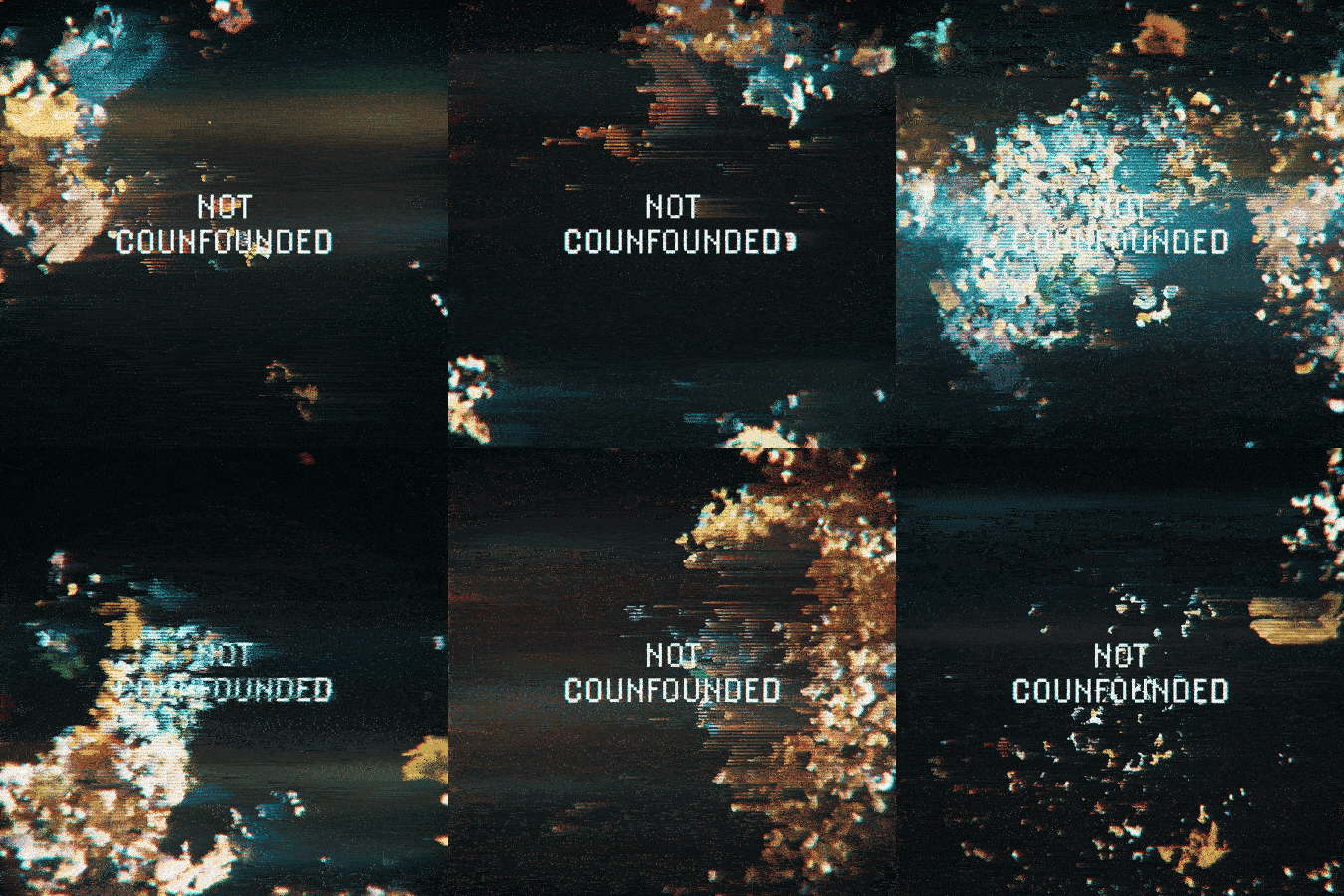
For this animation I found an interesting background texture and set a wiggle hold expression on the Rotation property to have it randomly rotate every X frames. Next precomped this and applied Mad Painted to create the brush stroke effects, which of course interacted with the rotation of the image inside the precomp.
I then added an Adjustment Layer and applied Pixel Sorter Studio to this and let it just kind of sit there on top; since it is based on luminance values it changes as the background does.
I finally added in some color correction and the Bad TV effect to create the scan lines and infrequent distortion.
Enjoy.
They cried to thee, and they were saved: they trusted in thee, and were not confounded. (Psalm 21:6 DR)
View a higher quality version of this gif here: