

Psalm 2:3
gotta serve somebody
Let us break their bonds asunder: and let us cast away their yoke from us. (Psalm 2:3 DR)
The first temptation that our race experienced concerned the question of how burdensome the commands of the Lord were. The serpent questions Eve about God’s command to not eat of the tree and wonders aloud if it isn’t an unreasonable imposition on her freedom, and perhaps God wanting to hold her back from something greater:
And he said to the woman: Why hath God commanded you, that you should not eat of every tree of paradise? And the woman answered him, saying: Of the fruit of the trees that are in paradise we do eat: But of the fruit of the tree which is in the midst of paradise, God hath commanded us that we should not eat; and that we should not touch it, lest perhaps we die. And the serpent said to the woman: No, you shall not die the death. For God doth know that in what day soever you shall eat thereof, your eyes shall be opened: and you shall be as Gods, knowing good and evil. (Genesis 3:1-5 DR)
It is fascinating how this temptation begins, for the serpent initiates the interrogation with a subtle deception. He doesn’t ask why she cannot eat of the specific tree that God commanded against, but rather asks why she is not allowed to eat of every tree of paradise. The temptation is framed as God unreasonably holding something back, as if she is owed the right to eat of every tree. The subtlety goes further, for the implication is that if she should not be able to eat of every tree, then perhaps in the future God may command even further restrictions.
She rightly points out that his premise is flawed, for it is only the one tree which is forbidden on pain of death. It is then that the serpent subtly shifts his tactic to question whether what God said is true, or if there is some ulterior motive. After all, if the command against eating of just one tree is seemingly arbitrary (as his initial question suggests), then the prohibition must arise not from the natural order or from the order of goodness but from deception on God’s part. She thinks that by serving God in obedience she is living in freedom, but the tempter suggests she is actually a slave to a jealous tyrant.
There is some truth to the serpent’s words, for in the case of sin and goodness there is always a question of who we will serve:
But you're gonna have to serve somebody, yes indeed
You're gonna have to serve somebody
Well, it may be the devil or it may be the Lord
But you're gonna have to serve somebody (Bob Dylan, Gotta Serve Somebody)
The Psalmist considers the kings and rulers of the world who have stood up against the Lord and against His Christ. Their rage and opposition to God arises, he notes, from their desire to be free of the “bonds” of God’s laws, of the “yoke” of His commandments. Much like the serpent in the garden, they see God’s will as an impediment to their freedom and thus attempt to cast it off, to serve themselves rather than God.
The desires of the flesh and the world are always opposed to God’s laws and His ways, for they seek these desire apart from virtue. In our sinful desires we want to have what we see as good according to our conception of it and how it should be attained, rather than submitting our wills and desires to the Lord and framing what we desire within what He desires.
This is actually the rub of sin. It’s not that the goods we desire are evil in and of themselves, but rather that we want to obtain them apart from God, who is the source of all goodness. The knowledge that the tree of the knowledge of good and evil provided was not per se evil, but was sought as a good in and of itself, by which man would be the arbiter of good and evil, rather than God. The sad irony is that the serpent promises that man would become like God in his attainment of this knowledge, but man was already like God, being made in His image and likeness. Sin had the effect of obscuring this image, and instead of granting freedom made man a slave to his own passions.
The freedom that God desired for His creation was not burdensome, but made them an integral whole. Instead of the constant warring of their passions against their reason there was a harmony of body and soul.
Following God’s law makes us free, for we begin to exist and live within the truth. It means a renunciation of the desires of the flesh and the world which—to be fair—is difficult, because sin has made us off-balance. But if we are honest with ourselves we can feel within our own being the war that rages between the good we know to do and the desires of the flesh which want what they want when they want it, and the seeming futility of fighting against them:
But I see another law in my members, fighting against the law of my mind, and captivating me in the law of sin, that is in my members. Unhappy man that I am, who shall deliver me from the body of this death? (Romans 7:23-24 DR)
The “freedom” of doing what we want is really just a base servitude that only Christ’s yoke of humility and docility to God’s will can overcome, as our Lord says:
Come to me, all you that labour, and are burdened, and I will refresh you. Take up my yoke upon you, and learn of me, because I am meek, and humble of heart: and you shall find rest to your souls. For my yoke is sweet and my burden light. (Matthew 11:28-30 DR)
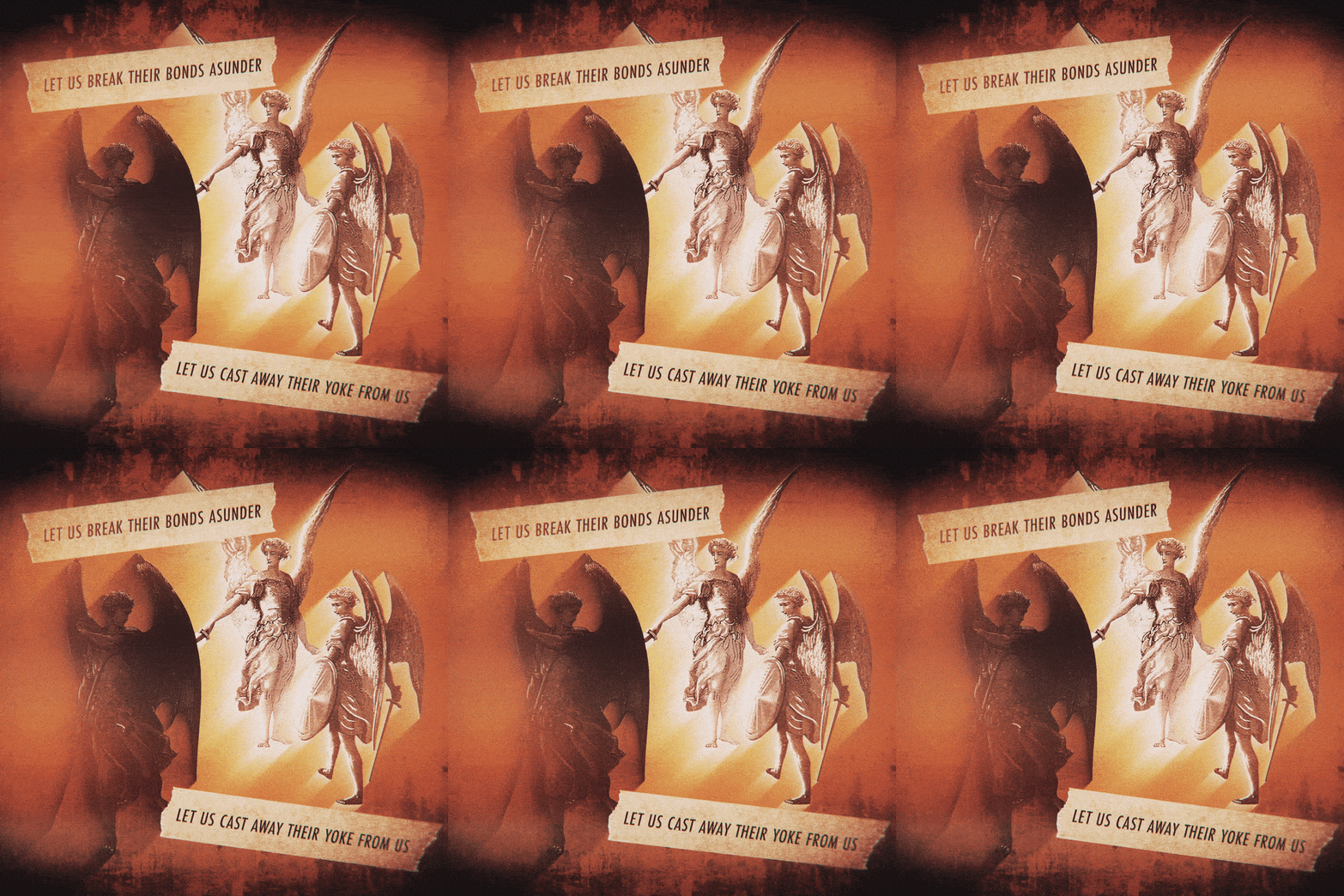
For this animation I found this excellent engraving by Gustave Doré from Paradise Lost about Satan being expelled from Heaven. In this scene some angels are blocking the path to heaven and he in defiance colloquially pouts and takes his ball and goes home. At least that’s the expression I see.
I cut out the figures in Photoshop and brought them into After Effects. I then applied Shadow Studio 3 to each one, using appropriate shadow coloring for each figure. I also applied a bit of Wiggle Hold to the Position and Rotation of each figure.
Next I brought in some masking tape textures to use for the backgrounds of the text and applied a similar wiggle hold to them while also parenting the text layers to the masking tape pieces. I finished up by adding some background textures and some color correction.
Enjoy.
Let us break their bonds asunder: and let us cast away their yoke from us.
(Psalm 2:3 DR)
View a higher quality version of this gif here: