

Psalm 27:2
difficult body language
Hear, O Lord, the voice of my supplication, when I pray to thee; when I lift up my hands to thy holy temple. (Psalm 27:2 DR)
Human communication is certainly verbal/intellectual, but a large part of it is performative; that is, body language plays a large role in how we convey what we think. This happens on a subconscious level such so that we are largely unaware of it, but we can tell that the same words mean something different depending on the body language of the one saying them. This is also why digital communication is fraught with conflict, in large part because the physical context that is some ways “smooths out” how we say things is absent, and only words remain.
The way in which we use our bodies to express our minds is true not just for speaking, but also for prayer. Prayer can certainly be a mental thing and can conceivably be done in any situation or posture, but even then the way in which we conduct our bodies in prayer has an impact on that prayer. The embodied nature of our existence entails that even mental prayer while kneeling while be—all things being equal—quite different than if slouching.
In the ancient world it was customary to extend one’s hands to pray; this gesture and posture was a means of physically placing oneself in the position of prayer, to thus enable one to be mentally and spiritually prepared. The Psalmist first describes his prayer and supplication to the Lord, and then in the parallelism expands this thought to show that his prayer includes the posture of hands extended.
This context forms the prophetic import of this passage, for the Psalmist looks forward to Christ and places these words on His lips as he extends His hands on the cross:
“When I pray to thee;” the Hebrew implies, that when he did pray, he had his hands stretched out, for both Hebrews and gentiles were wont so to extend their hands in prayer; and, in using this expression, the prophet had before him the hands of our Lord extended on the cross and raised to heaven; for then, with the greatest truth, could he say, “When I pray to thee, when I lift up my hands;” when he prayed from the cross. (St. Robert Bellarmine, A Commentary on the Book of the Psalms, 27, 2.)
The cross, therefore, is itself a prayer, for prayer is—among other things—placing oneself within God’s will. There are even specific prayers from the cross, such as for forgiveness for His enemies and His final commending of His soul to the Father.
The cross is thus the archetype of our posture for prayer, not specifically for the physical expression but rather for the submission of will to God. Prayer becomes a stretching out of one’s hand upon the cross, as it were, an intentional immolation of one’s own will. St. Paul speaks thusly:
I beseech you therefore, brethren, by the mercy of God, that you present your bodies a living sacrifice, holy, pleasing unto God, your reasonable service. (Romans 12:1 DR)
To be this living sacrifice entails that such an offering to the Father is on ongoing immolation, a decision to resign one’s will to God’s each day and in each moment. Thus our Lord says:
If any man will come after me, let him deny himself, and take up his cross daily, and follow me. (Luke 9:23 DR)
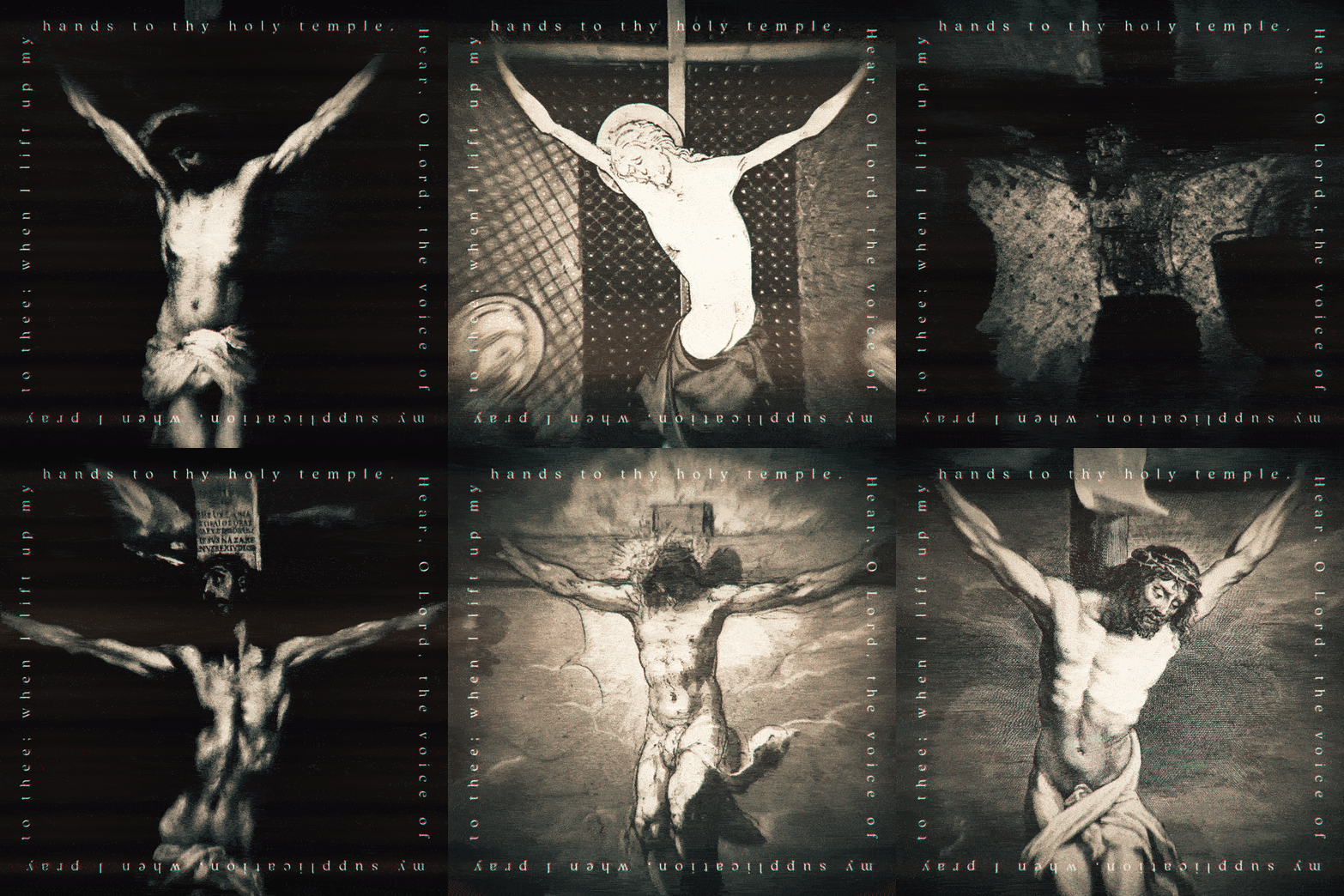
This animation was pretty straightforward in that I found a bunch of paintings of the crucifixion and brought them into After Effects. I set up a precomp and placed all the images and scaled them to more or less have the same relative size and positioning. I then counted the number of images I had and divided the number of frames by that to determine the number of frames each image needed to be and then sequenced them.
I finished up with some color correction and some distortion effects for visual interest.
Enjoy.
Hear, O Lord, the voice of my supplication, when I pray to thee; when I lift up my hands to thy holy temple.
(Psalm 27:2 DR)
View a higher quality version of this gif here: