

Psalm 29:2
down but not out
I will extol thee, O Lord, for thou hast upheld me: and hast not made my enemies to rejoice over me. (Psalm 29:2 DR)
When we reflect on our lives, we can often be weighed down by the many failures that inevitably encompass us all. Whether these are of our own doing or beyond our control, we all have had times when it seemed that something has prevailed over us and we are defeated.
The sin of despair finds a perverse comfort in this sort of failure, in that it causes us to abandon all hope of salvation or forgiveness or of God’s goodness. This can be cloaked in a twisted form of self-deprecating humility, but it has nothing to do with humility as it is rather a most intense form of pride which considers one’s own failures or sins to be beyond God’s mercy or power to forgive and transform.
A sorrow for sin can lead to either repentance or despair, as is seen in the case of Peter and Judas, respectively. Both betrayed our Lord in their own ways and both immediately regretted it, but whereas Judas despaired of God’s mercy and took things into his own hands, Peter returned to God’s mercy and found forgiveness. The pride that caused him to sin he laid aside in humility and was restored. While sin may have gotten the better of him in that moment of denial, he was ultimately able to prevail over it and sealed his confession of Christ in his own blood.
In this verse the Psalmist considers the goodness of the Lord who has given him rest from his enemies and exalted him above them. As this Psalm is for the dedication of David’s palace, this context naturally brings to mind David’s life and story. He was not of noble lineage but was chosen from among his brothers to be king and anointed while still a lowly shepherd. He faithfully served King Saul and was unjustly treated and nearly killed for his efforts, yet through this he did not raise his hand against God’s anointed nor lose hope in God’s promises. After being effectively exiled he eventually was restored to his people and assumed the throne and was given victory over all his enemies.
When he speaks of his enemies not rejoicing over him, it is tempting to move past that without much thought, but in the Psalmist’s voice this carries the weight of years of struggle and hardship, of betrayal and threats against his life, of sacrifice and pain until the promises of God were finally revealed and brought to fruition. Thus it is not some glib verse to fill out the parallelism of the poetic structure but is borne out of sleepless nights and hard-fought days. For the Psalmist, that his enemies do not rejoice over him is part and parcel of God’s work and faithfulness to him throughout his entire life, and thus forms the basis of his prayer and praise.
The Psalmist’s words carry prophetic import, for he speaks not only of himself but of Christ and his Church. Our Lord promised persecutions and trials for those who would follow after him, and the early history of the Church bears this out strikingly and follows the pattern of the Psalmist’s oracle:
It is then whole Christ who speaks. “I will exalt You, O Lord, for You have taken Me up” [Psalm 29:1.] I will praise Your high Majesty, O Lord, for You have taken Me up. “You have not made Mine enemies to rejoice over Me.” And those, who have so often endeavoured to oppress Me with various persecutions throughout the world, You have not made to rejoice over Me. (St. Augustine, Expositions on the Psalms, 29, 2.)
The empires and kings that have set themselves against Christ and his Church have fallen into ruin, but she remains. The long suffering of the Church Militant thus finds comfort and consolation in the words of the Psalmist, God’s promises will not be made void, and thus she will remain and rejoice over her enemies.
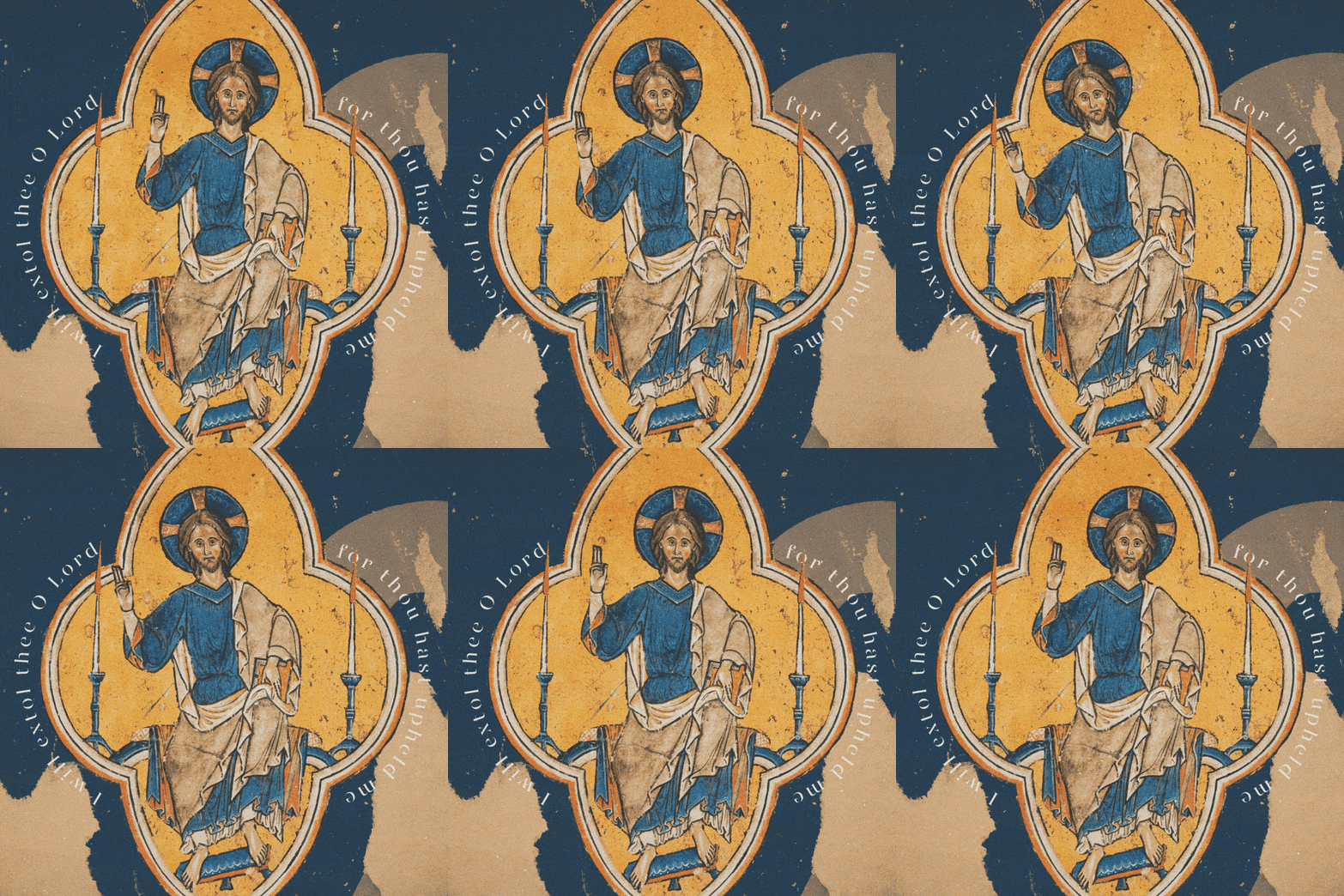
For this animation I wanted to follow the framing that St. Augustine takes with this, and so I found this great medieval miniature of Christ enthroned which I thought would form a nice basis for the piece.
I cut out the figure in Photoshop and did a lot of cleaning up using various tools therein, mostly separating the figure from the background within the frame. I then brought the layers into After Effects and rigged them up with the Puppet Tool and then did some light animation on the figure. I also cutout the flames from the candles and just added some wiggle hold to the rotation to give them a bit of a flickering effect with the style.
Enjoy.
I will extol thee, O Lord, for thou hast upheld me:
and hast not made my enemies to rejoice over me.
(Psalm 29:2 DR)
View a higher quality version of this gif here: