

Psalm 29:6
the good, the bad and the reality
For wrath is in his indignation; and life in his good will. In the evening weeping shall have place, and in the morning gladness. (Psalm 29:6 DR)
In this world of troubles we often come fact to face with the dilemma of suffering, wondering why it occurs so frequently and what possible purpose it could serve. In our hubris we imagine to ourselves a universe of our own crafting in which there is no suffering, no pain, no disappointment, and in which we receive everything we could desire and that we presume would make us happy.
The untold lie behind this premise, however, is that our race once was in precisely this situation. Our first parents lived in a world without suffering or pain or death. They walked with God and enjoyed all things without the twinge of guilt or of any of the maladies that afflict their progeny. In full control of their appetites and passions ordered by reason, they were in a state of preternatural integrity, unlike the constant warring of our spirit against our flesh.
Yet even in this state that we all seem to long for and presume that we deserve, they still chose to fall, they still chose to disobey God. The serpent’s deception was that they could become like God, by which they forgot that they already were like God, created in his image and likeness unlike any other created being, even the angels.
Yet for the human heart this state of goodness and peace still wasn’t enough. The reality is that they were on the threshold of heaven, but dove face first into hell. In our hubris we think we could craft a universe in which there is no suffering, which belies an ugly reality—this state that we think we desire where we get everything we want isn’t some utopia or even heaven itself, but is actually what hell is like, as we see in that fateful first choice.
The reason for this isn’t that our desires reach beyond our longings or even that we stretch our hands out for forbidden fruit—these are merely symptoms of a deeper issue. It’s not that we desire too much, but rather that we desire too little.
After all, God gave our first parents everything, including communion with himself. Yet when the time of decision came that just wasn’t enough, or rather, it was too much. The problem with the choice in the fall has nothing really to do with fruit but rather that it opts for a universe without God, in which he is not the central figure or the object of adoration. This is evidenced by the initial meeting after that choice:
And when they heard the voice of the Lord God walking in paradise at the afternoon air, Adam and his wife hid themselves from the face of the Lord God, amidst the trees of paradise. And the Lord God called Adam, and said to him: Where art thou? And he said: I heard thy voice in paradise; and I was afraid, because I was naked, and I hid myself. (Genesis 3:8-10 DR)
They immediately understood that their decision entailed their choice of their own will over that of God’s, which is why they hid themselves. They realized that communion with God was simply not compatible with their sinfulness, as their idolatry of themselves tried to create a universe with more than one God. They tried to take heaven by force, to craft a world in which their will forged reality, only to discover that they had not only not attained that, but lost everything else along the way. As odd as it sounds, their choice of sin was a preference for hell, to reign in their own pocket kingdom rather than to share their reign with God.
In the parable of the prodigal son our Lord concludes by noting the attitude of the brother who had not squandered his inheritance like the prodigal, but had continued to serve his father. Yet when his wayward brother returns he becomes indignant, resentful that his father has shown such mercy and jealous of the attention received. The father replies:
Son, thou art always with me, and all I have is thine. (Luke 15:31 DR)
The brother who stayed may not have been as lavishly prodigal as his brother, but in his heart desires hell as much as the wayward one. Perhaps he simply didn’t have the courage of his brother, but he views his relationship with his father as oppressive and disdainful, resentful that his brother got through knavishness what he himself would also desire to have. But rather than understanding himself as a son, he sees himself as someone set against his father, someone who wants the good his father possesses but must wait to obtain. Just like his brother, he sees his father as something in the way of the world he desires to create, and just like our first parents desires a world apart from him just like they did in respect to God.
In our struggles with suffering and pain we can be tempted to act like our first parents or like the “faithful” brother in the parable, yet in our hearts may still be children of hell who long for it under the guise of possessing what we desire. This fantasy universe we are so good at creating is also adept at either eliminating God altogether or force-fitting him into it at the expense of his omnipotence and holiness so that he becomes a means of self-affirmation for our desire and decisions.
Suffering in this sense becomes a mercy to us, for it acts both as a reality-check against our hubris and provides a way to abandon the imagined self-sufficiency so as to depend upon God and his grace in the midst of it. Suffering becomes a crucible of faith that—though difficult to understand—provides the only means of spiritual growth as we are afforded the opportunity to strip ourselves bare of all pretense and delusion to come face to face in that clarifying moment with the reality of our lives and our absolute need for God in it.
The Psalmist in this verse captures the essence of these reflections, teasing out poetically that God’s ways are both in our suffering and in our joy. The two, in fact, are not mutually exclusive but rather corollaries of each other that work hand-in-hand to lead us deeper into the mystical heart of our Lord in his joys and his sufferings. St. Paul notes that our suffering mystically fills up what is lacking in Christ’s suffering:
Who now rejoice in my sufferings for you, and fill up those things that are wanting of the sufferings of Christ, in my flesh, for his body, which is the church… (Colossians 1:24 DR)
St. Paul understands his deep sufferings as a participation in the sufferings of Christ, by which he moves closer to that flame of charity that animated our Lord in his Passion and was the cause of our redemption. In imitation of our Lord’s suffering the trials we face and the pain we experience can also participate in that redemption, as we are made more like unto Christ the more we imitate him in his sufferings. St. Paul notes—in line with the Psalmist here— that Christ:
[W]ho having joy set before him, endured the cross, despising the shame, and now sitteth on the right hand of the throne of God. (Hebrews 12:2)
In this manner suffering is never wasted, and in fact becomes merely tragedy if not turned towards a redemptive end. Our Lord promised that in this world we will have troubles, but these troubles are not o be feared, not because they won’t be painful, but rather because he has overcome the world and provides the means by which our suffering can turn towards our sanctification and the sanctification of the world.
Weeping belongs to the night—the night being the days of this life in this vale of tears, full of sorrow and suffering. But morning arises eventually, bringing gladness and eternal day.
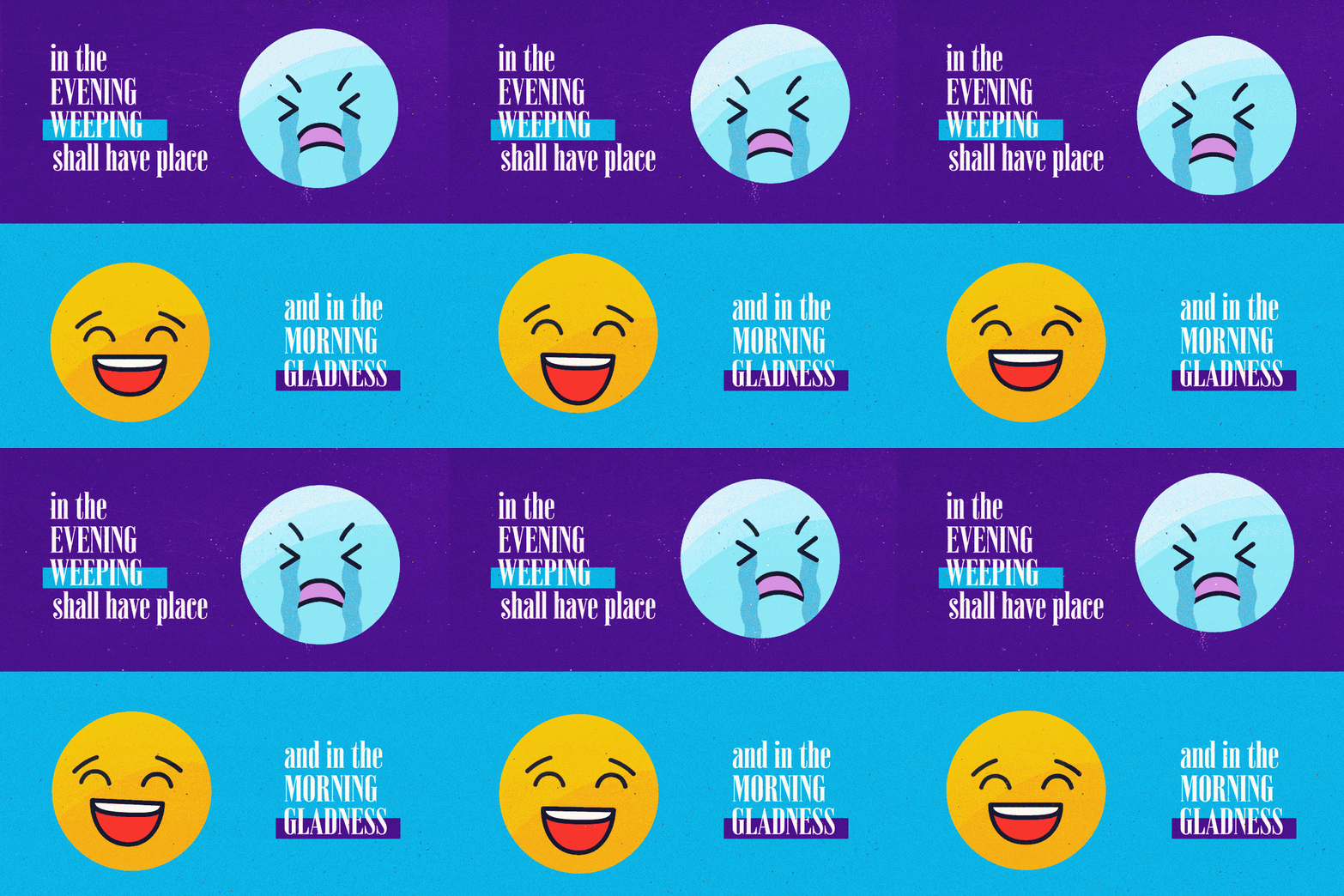
In this animation I wanted to keep it pretty on the nose, but thought it might be fun to use some emojis for this. I drew these two emojis in After Effects and animated them separately, hoping to give them some nice emotion (emojis after all!) in their expression.
For the tears of the crying emoji I simply drew a rectangle and added the Wave Warp effect to it, so pretty easy. I also used a great tool called Noodle which lets you set up these expression chains so that various parameters are linked to parent parameters and then do overshoot and such based on the linked parameter. The end result is a very fluid and noodle-y look that is great for this sort of project. It can be a bit tricky to nail down, but it can add in some great expressiveness when used judiciously.
Enjoy.
For wrath is in his indignation; and life in his good will.
In the evening weeping shall have place, and in the morning gladness.
(Psalm 29:6 DR)
View a higher quality version of this gif here: