

Psalm 31:9
horse and rider
Do not become like the horse and the mule, who have no understanding. With bit and bridle bind fast their jaws, who come not near unto thee. (Psalm 31:9 DR)
The sad reality of our race is that even though we endowed with the stupendous gift of reason— which makes us like unto God and the angels—in most cases we end up having to learn the hard way according to our animal nature.
The famous Pavlov experiment with dogs involved training the dog to salivate at the ringing of a bell, whether or not it was to receive a treat. This involved a process of associating treats with the ringing, and then eventually habituating this response in the dog so that the mere stimulus was enough to elicit a physiological response.
As rational beings we are created to have mastery over our animal nature, so that our appetites and passions are ordered towards the good. Original sin, however, has broken this hierarchical ordering, and more often than not inverts it so that we find it incredibly difficult to obtain mastery over our senses.
This embodied nature of our existence can be a double-edged sword. On the one hand, by developing good habits we can habituate ourselves unto virtue, sort of like training a dog to sit on command. With my dogs, for example, they have been habituated to sitting for treats so much so that that I only have to show them the treat and they will (usually) sit. They have no understanding per se, but they don’t need it, as it’s become the non-rational equivalent of a habit. Similarly, we can habituate ourselves in virtue; for example, the repeated action and discipline of prayer can make it almost second-nature, to the point where missing it for some reason can leave one feeling off because the habituated action is not present.
On the other hand, vices can also be habituated, and often far more easily because of original sin. Our appetites, while not sinful in and of themselves, can easily be used in a disordered manner, all the more so because we have rationality which because of sin has also been bent towards vice. My dogs, for example, will generally not overeat their dog food, probably because it likely doesn’t taste that great. There’s a sort of built-in limit to their appetite. But if I only fed them things like steak and ice cream, they would eat until they threw up (which has accidentally happened before…). And while I can take away the richer foods from my dogs, for us humans we are usually the ones who have to choose to take away the things in which we over-indulge, which becomes more difficult the more they become habituated.
In this verse the Psalmist implores his reader to consider the consequences of the sins he is repenting of, to see them as a warning of the results of indulging in vice:
The prophet now exhorts all, both good and bad, to learn from his example the evils consequent on sin, and the blessings to be derived from penance and virtue, he having tasted of both. Turning to the wicked first, he says, “Do not become like the horse and the mule, who have no understanding.” Endowed with reason, but not guided by your animal propensities; be not like the horse and the mule in your licentious desires, as I was… (St. Robert Bellarmine, A Commentary on the Book of the Psalms, 31, 9.)
The horse and the mule become analogies for our appetites, which when unbridled are wild and untamed, rushing forth powerfully wherever they will and only with great effort brought under control. I don’t have much experience with horses, but the little I have has convinced me of their power, and how if they so desired they could fairly easily kill or severely injured me. I’ve only ridden a horse once, and it was a somewhat nerve-racking experience because of this fact.
But a tamed horse that is set up with bit and bridle is under some form of control, and the more experience one has with horses and riding them the more this control becomes less of forcing the horse to do something and more of a symbiotic relationship where the horse and rider become to some extent as one. What could be an otherwise dangerous thing becomes instead a means to greater things than one could do without it.
In a similar manner we have to see our appetites and passions not as a liability but as something desired by God for us that helps us to be greater than our intellect alone. God created us as embodied beings, a composite of body and soul. It can be tempting to fantasize about being Vulcans not subject to emotion or appetite, but that would be a denial of what God created us to be. Our appetites and passions rightly ordered give impetus to our intellect and will, whereas otherwise we might be static intellects content to never move beyond the current moment or position. The angels as pure intellect perceive being as it is, but we as embodied beings come at it discursively; our lower nature rightly ordered can impel this quest for knowing and the totality of satisfaction that attaining knowing brings.
As we bridle our passions and put a bit in the mouth of our appetites, they can help lead us into greater virtue and greater understanding of God, just as a man riding a horse is faster and stronger than one on foot. We must rightly use what God has given us in all aspects of our being to come into the light and love that he desires for us, as as desires and requires of us the entirety of who and what we are, just as in Jesus he became like us in all things.
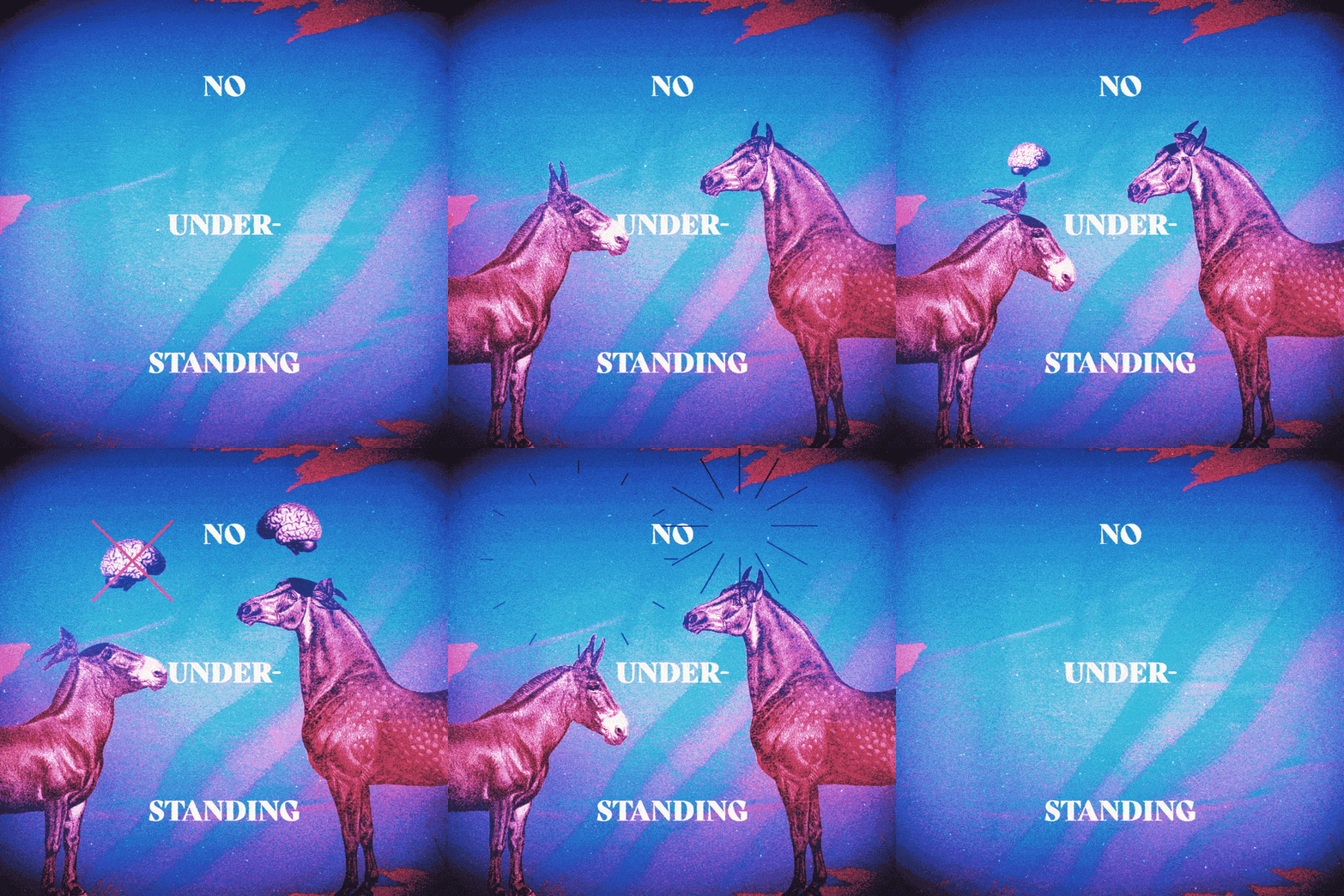
I thought it would be fun to go on the nose with this animation.
I found some great illustrations from some late 19th century zoological books and cut out the horse and mule in Photoshop. In After Effects I duplicated them and applied some masking for the cranial openings and animated those, using some simple scale and position animation on the brains, with overshoot of course.
I also used the Puppet Tool on the horse and mule for the head and neck raise, using the ever useful Puppet Tools 3 to attach the pins to Nulls, which—given the amount of times I use this—has probably been one of the best purchases I have ever made, since animating puppet pins without this is kind of a pain and gives you less flexibility in the kinds of animation you can do (at least easily).
The rest is pretty straightforward, and I though the result was pretty fun.
Enjoy.
Do not become like the horse and the mule, who have no understanding.
With bit and bridle bind fast their jaws, who come not near unto thee.
(Psalm 31:9 DR)
View a higher quality version of this gif here: