

Psalm 38:10
a time to speak and time to zip it
I was dumb, and I opened not my mouth, because thou hast done it. (Psalm 38:10 DR)
When we are wronged one of the first instincts we have is to retaliate, to render like insult for like. Declining from this, if an unjust reproach is brought against us we naturally want to respond in defense of ourselves our character or our actions. There is nothing wrong per se in such a defense, but as with most things, there is a time and a season (cf. Ecclesiastes 3:1-8).
As the Psalmist bears reproaches from his enemies, he is sorely tempted to defend himself. After all, in the previous passage it was his righteousness that became a reproach to the wicked and compelled them to rebuke and persecute him. Should he not then of all times speak up in his own defense?
The instinct to defend ourselves is deeply woven into the fabric of our being, which poses potential problems in that our human nature is weakened through the fall. Thus, what otherwise might be a legitimate and even good defense can very easily degenerate into retaliation for its own sake or into a mere knee-jerk reaction to a threat. It is like anger—anger itself is a good thing if directed towards injustice, but the difficulty is that our anger easily goes awry, so that we are cautioned that our own natural anger rarely fulfills God’s righteousness (cf. James 1:20).
It is precisely because the Psalmist is certain of his righteousness that he is able to hold his tongue, for he understands that God’s vindication of him is superior to his own. In the life of King David he bears the insults of Semei while fleeing Jerusalem during the attempted coup, and though advised to rid himself of Semei he stays the hand of his men, reasoning that God will reward his silence:
Perhaps the Lord may look upon my affliction, and the Lord may render me good for the cursing of this day. (2 Samuel 16:12 DR).
The fascinating aspect of this story is that the Lord did not command Semei to curse David; rather, Semei had a blood-feud with David’s family and wanted vengeance for King Saul. He thus saw David’s exile as well-deserved and wanted to make his contempt known as David was fleeing, so much so that he was even willing to die to have his pound of flesh, as he must have known he was taking his life into his hands by making such insults.
However, since David kept his peace he did not fall into the trap of rendering evil for evil, and thus fulfilled St. Paul’s admonition:
Be not overcome by evil, but overcome evil by good. (Romans 12:21 DR)
In his silence the Psalmist fulfilled righteousness even while suffering injustice and was in the final analysis vindicated by the Lord over his enemies. He he spoken rashly or executed vengeance on his enemies he would have been guilty of blood and his vindication would not have been forthcoming. We therefore find the paradigm that it is meritorious to confess one’s sins, but meritorious to hold one’s peace about one’s own righteousness. In both cases we leave it for God to adjudicate and reframe each scenario around His holiness and goodness with the realization of our weakness.
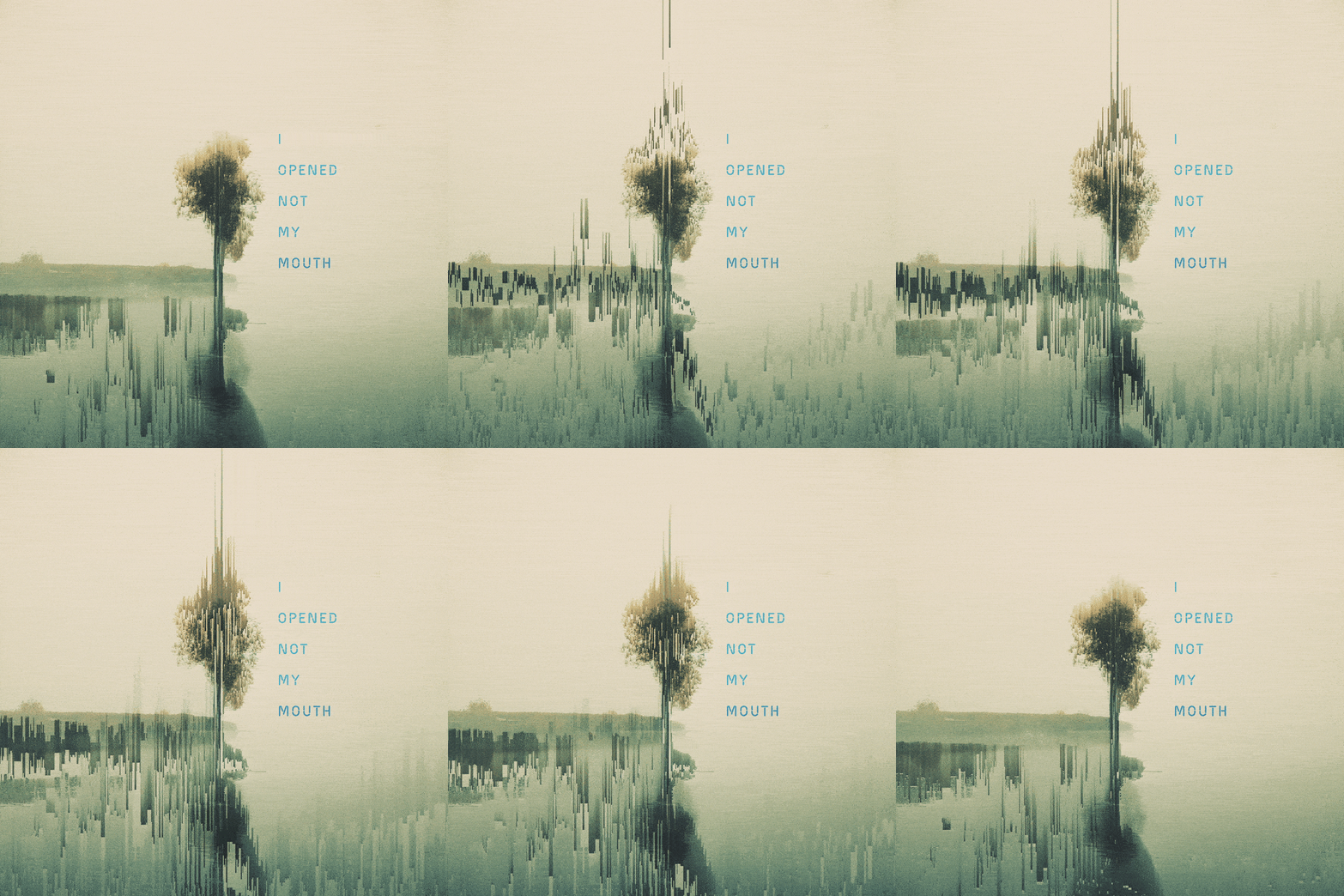
In this animation I kept it pretty simple. I found this nice image of a lonely tree which for some reason says “silence” to me. I brought it into After Effects and applied some pixel sorting to it to give it some movement as well as some color correction to give it a bit of moodiness.
Enjoy.
I was dumb, and I opened not my mouth, because thou hast done it.
(Psalm 38:10 DR)
View a higher quality version of this gif here: