

Psalm 5:2
learning to speak in whines

Give ear, O Lord, to my words, understand my cry.
(Psalm 5:2 DR)
My dog Luna definitely has a language, and unfortunately I have come to be fluent in it. I have termed it puppy whine, an exotic dialect of whines, grunts and guttural tones.
The really sad thing is that I know exactly what each sound means, even though they practically all sound the same. Sometimes it means I want food. Other times it means I want to go outside for 15 seconds. And sometimes it means I need a drink of water but won’t move from the chair even though I can easily do so without you telling me to do it.
Dogs have no guile and no double-mindedness. Any "“communication” from them thus arises in all “sincerity” from their very depths. Lacking rationality, they don’t know what they want; their cries are at the moment the totality of their being. A corollary is that they “trust” that I understand them and will fulfill their needs.
Humans, on the other hand, often ask for things without sincerity or trust. We have the same needs as the brutes, but our fallen nature infects us with guile, and so we can ask for something good with bad motives. St. James mentions this dynamic:
You contend and war, and you have not, because you ask not. You ask, and receive not; because you ask amiss: that you may consume it on your concupiscences. (James 4:2-3 DR)
For we humans, prayer has to be more than just a whine; we can pray well and we can pray badly. That doesn’t mean simple prayers are therefore bad; long-winded prayers can be just as whiny. But perfect prayer is when one brings one’s petitions to God in a spirit of humility and trust, desiring God’s will above all else. The Psalmist looks to this humility of heart and humbly requests that God would hear his prayers and give ear to his cries; not because God doesn’t know or understand, but rather because the Psalmist understands that without the humility of heart his prayers will—as it were— fall upon deaf ears. St. Robert Bellarmine comments on this verse as such:
Therefore, the holy prophet, when about to pray, commences by asking that God may see, understand, and attend to him… The prophet then, inspired by the Holy Ghost, with consummate skill asks God for the gift of perfect prayer; that is to say, that when he shall pray, his prayers may not be repulsed, but that they may be heard, understood, and attended to adding, “My King,” for a king is supposed to hear his people; and “My God,” raising up an additional claim as a creature, and therefore depending on his Creator for everything. (St. Robert Bellarmine, A Commentary on the Book of Psalms, 5, 1-2)
This perfection in prayer is ultimately found in communion with the Holy Spirit. St. Paul tells us:
Likewise the Spirit also helpeth our infirmity. For we know not what we should pray for as we ought; but the Spirit himself asketh for us with unspeakable groanings. And he that searcheth the hearts, knoweth what the Spirit desireth; because he asketh for the saints according to God. (Romans 8:26-27 DR)
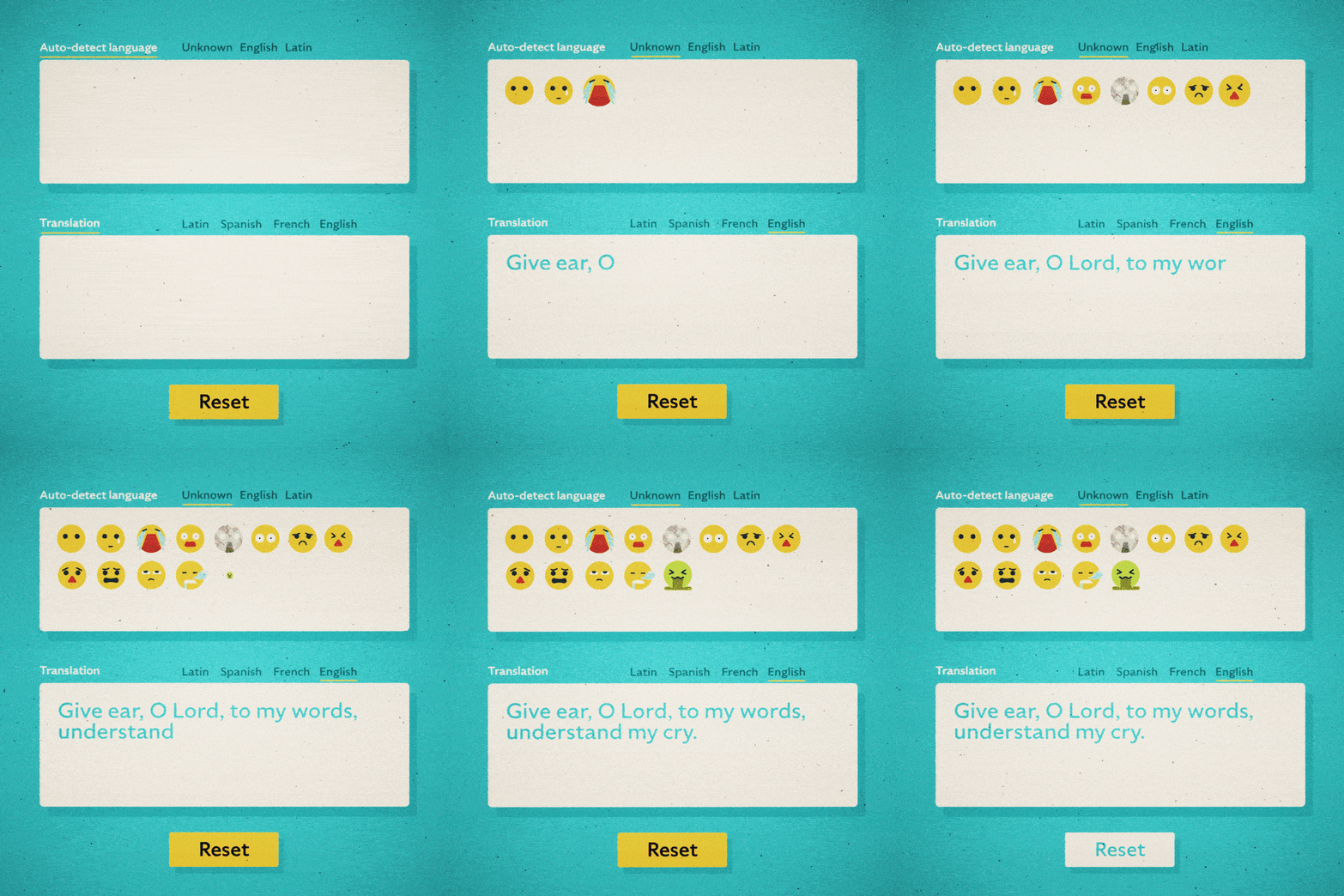
For this animation I wanted to illustrate the notion of how we often don’t know what we pray for or what we should pray for. I thought the notion of an online translation would be interesting, turning emojis into this verse of this Psalm, almost like the Holy Spirit is translating our prayers when we don’t know how to pray or what to pray for.
I found a great set of emojis and used the ones that were in distress of some sort, and then added a typewriter effect to the translation. Stupidly simple animation, but I think it was kind of fun.
Enjoy.
Give ear, O Lord, to my words, understand my cry.
(Psalm 5:2 DR)
View a higher quality version of this gif here: