

Psalm 5:7
blue screen of death

Thou hatest all the workers of iniquity: Thou wilt destroy all that speak a lie. The bloody and the deceitful man the Lord will abhor. (Psalm 5:7 DR)
My first computer was sometime around 1994. It had a blazing fast 25mhz processor, a bottomless 4 MB of RAM and an endless 200 MB of storage space. Regarding the latter, it seemed like it would never possibly run out. And to be fair, I don’t think it ever did, but only because of diligent cleansing of the hard disk every so often, including an unfortunate endeavor by a purported expert which caused significant problems, the most devasting of which was that I could never play Cohort: Fighting for Rome again.
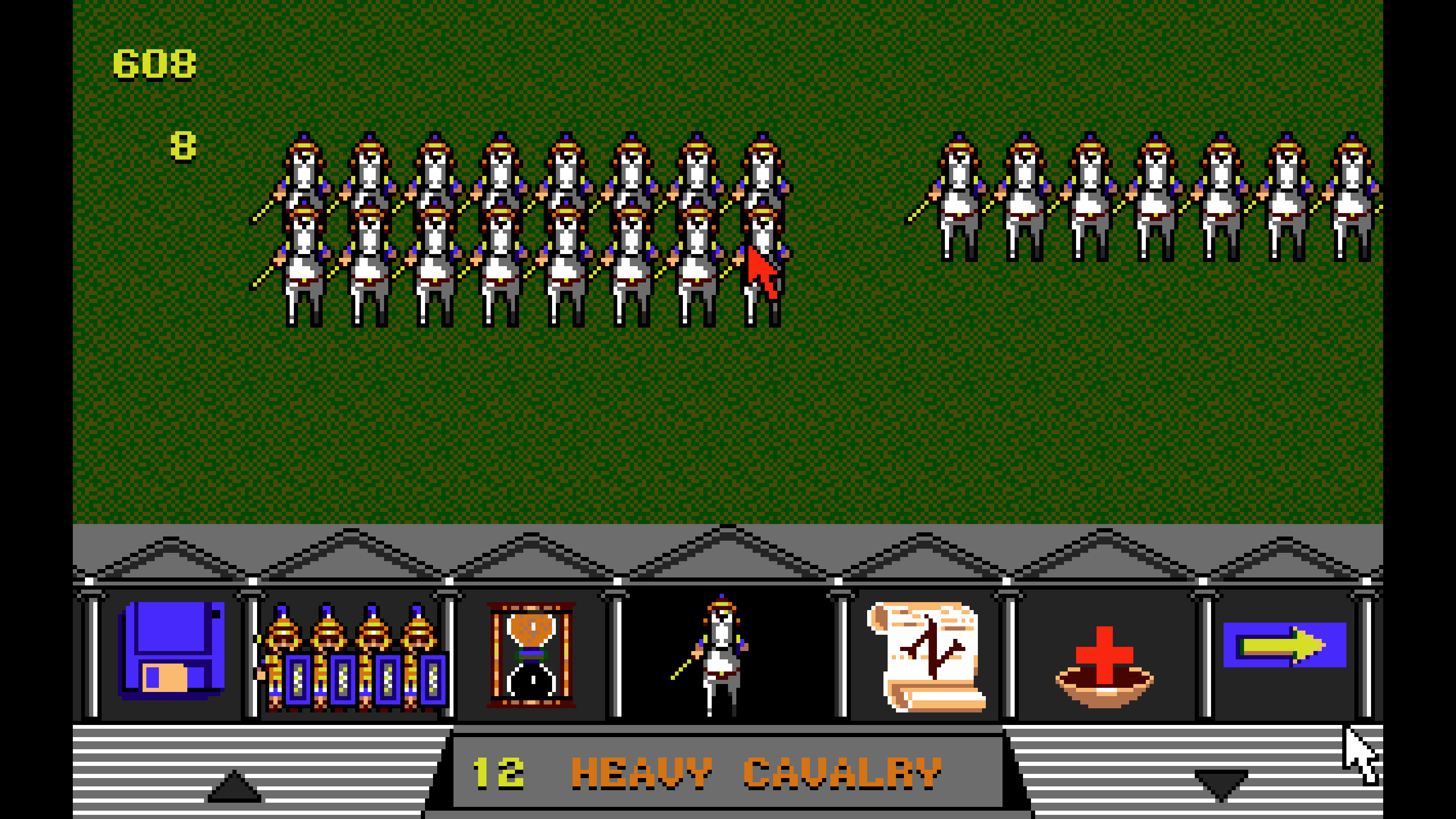
When we got our computer the venerable Windows 95 had just come out, and I would spend hours digging through the interface, changing interface colors, finding hidden things in the DOS, and so much more, although often playing The Incredible Machine which, to be fair, was amazing.

One famous quirk of Windows has always been the infamous blue screen of death. Arising from any number of errors, it usually meant a total loss of whatever unsaved data was being worked on. Sometimes you could theoretically wait for the issue to resolve and return to Windows, but you generally had to suck it up and Ctrl+Alt+Del your way back to productivity. Regardless, it always feels like the computer is punishing you for something.
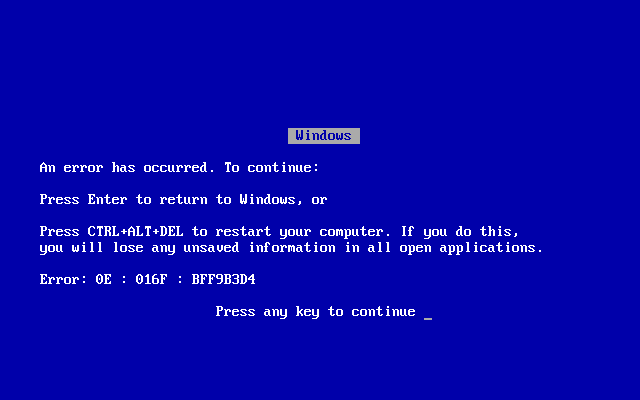
Interestingly, I don’t recall ever experiencing the BSOD on my childhood computer. It could be that programs and such were less complex back then and thus didn’t introduce as many potential errors, or that I didn’t push it hard enough. However, now that I am back on Windows and have a purportedly high-end computer for high-end work, I have experienced a fair amount of BSOD’s. And, unfortunately, auto-save doesn’t always auto-save.
This verse of Psalm 5 has the Psalmist recapitulating the thought from the previous verse in the form of parallelism. He had already stated that the wicked will not dwell near to God; now he fleshes that out by drilling down into the acts of iniquity themselves, specifically those who speak a lie. St. Augustine assigns the inability of the wicked to dwell near to God in that those who love lies and speak them cannot abide to be near to the truth:
God's hatred may be understood from that form of expression, by which every sinner hates the truth. For it seems that she too hates those, whom she suffers not to abide in her. Now they do not abide, who cannot bear the truth. (St. Augustine, Expositions on the Psalms, 5, 7.)
St. Robert Bellarmine would no doubt agree with this, but views it from the obverse perspective:
God’s hatred of evil, or evil doers, is not only negative, but he positively hates, seeks to destroy them, and, actually, will do so: and as sin is committed by act, word, thought, or desire, each is here enumerated; first, the “Workers of iniquity;” secondly, they that “Speak a lie;” thirdly, “The bloody and the deceitful.” (St. Robert Bellarmine, A Commentary on the Book of the Psalms, 5, 6.)
There is thus a dual aspect to deceit and thus of all sin. Our love of lies destroys in us the capacity for truth and to know and love the truth. If truth were able to materially fill a volume, our hearts would in this analogy become to shrunken to contain it. This inability to love and engage with the truth creates a situation in which it becomes morally painful to be in its presence, as (in another analogy) its clarity is too piercing to stand, like coming out of a darkened room into the full light of the sun.
To the hater of truth, this pain is experienced as an active attack, an intentional punishment, even though it may be the natural moral result of loving deceit. In God’s ordering of the moral universe he punishes evil, but not always actively in the sense that we may consider. Rather, the natural moral result of hating truth brings its own punishment, as all sin does. Through the secondary cause of this ordering God’s justice against sin is often effected, and sometimes leads to complete self-destruction, which reconciles Sts. Augustine and Bellarmine, in that God’s justice is employed both actively in the sense that we might consider it but also through the secondary cause of the moral ordering of the world.
In this animation I was somehow inspired to do something with the Blue Screen of Death. I was considering (or at least am now!) that the BSOD always felt like a punishment from the computer, which arises from the cause of some conflict in the programming that the user introduces, although usually unintentionally. At any rater, I thought it might make a nice metaphor.
A couple years ago I had painstakingly recreated the Windows 95 desktop and thus had these Illustrator files sitting around on my computer. I brought them into After Effects and just did some simple animation where the mouse moves over to WordPad (which I still use!), clicks and starts typing.
The mouse cursor state change is probably the most interesting animation from a technical standpoint. I created a single shape layer with a bunch of different mouse states and linked each layer’s opacity to an expression checkbox which basically uses an if/else to determine if it is visible or not. Basically, if the checkbox is On the Opacity is 100, if Off then an value less than 100. I placed Hold keyframes on each Checkbox so that I could just click on checkboxes and add keyframes without worrying about opacity changes between keyframes.
I thought it’d be interesting to have the BSOD appear after typing out Speak a Lie. The typing animation is just the stock typewriter text preset in After Effects, so nothing special. And then I just recreated the BSOD and added in some of the rest of the verse for effect.
Enjoy.
Thou hatest all the workers of iniquity: Thou wilt destroy all that speak a lie.
The bloody and the deceitful man the Lord will abhor.
(Psalm 5:7 DR)

View a higher quality version of this gif here: