

Psalm 5:9
puzzling directions

Conduct me, O Lord, in thy justice: because of my enemies, direct my way in thy sight. (Psalm 5:9 DR)
When I was younger I used to agonize about big decisions, not only because of their potential consequences, but also because I was on some level desirous of following God’s will, however nascent that might have been. My problem was (and probably still is) that I turned the entire problem onto myself, lacking trust that God would actually guide me. Instead I felt like I had to figure it out perfectly or I would accidentally miss out on the right and prudent way.
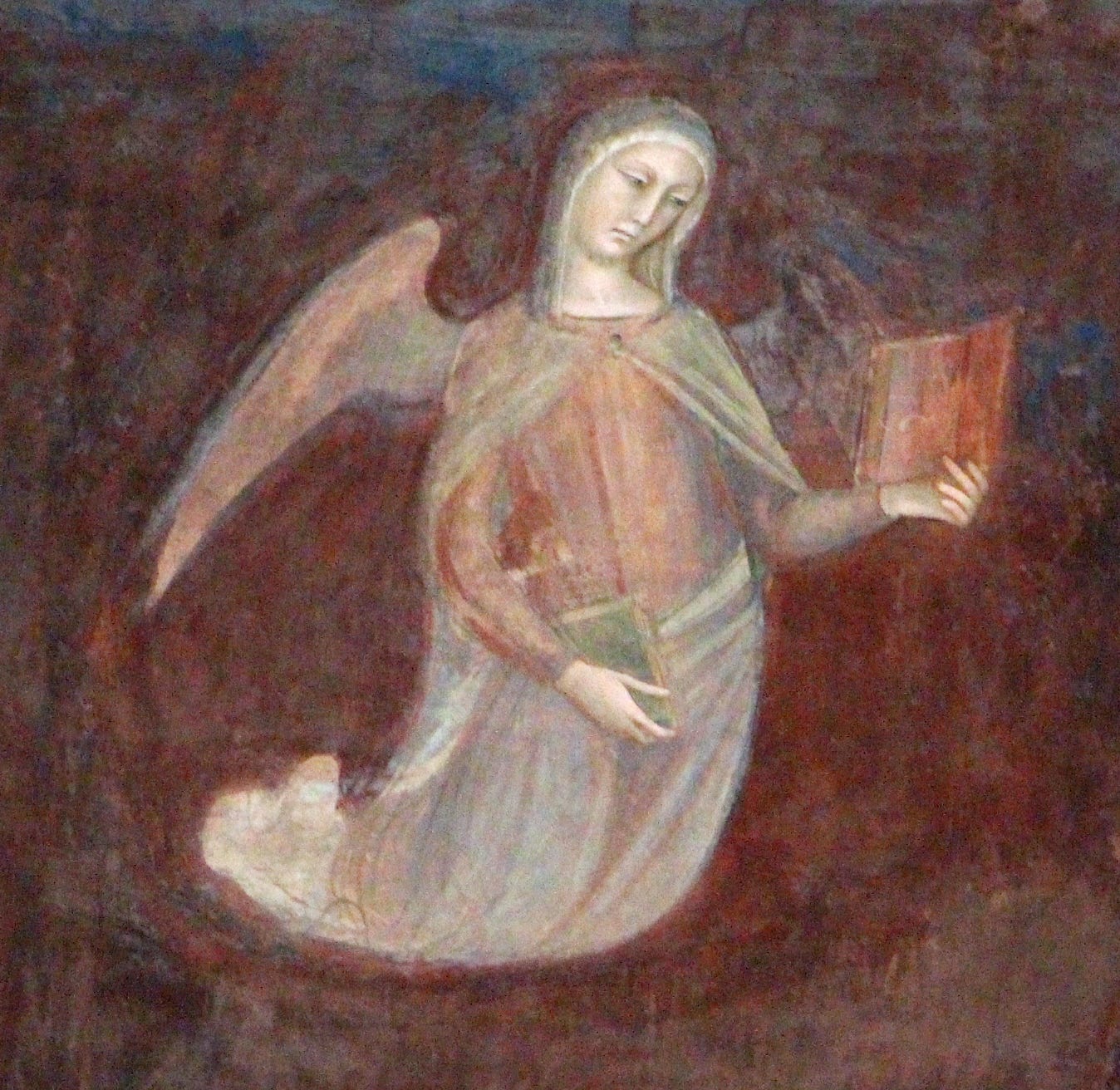
This indecision led me in many cases to allow circumstances to make decisions for me, for good or for ill. In some ways this was a relief as I (wrongly) thought this more or less let me off the hook; after all, if I had no choice, then how could I make the wrong choice?
But I have come to learn (and desperately need more schooling in this!) that the virtue of prudence is not in allowing some vague notion of fate to rule one’s decisions. Doing so actually could lead to vice, as one empties out the rationality that God gave us specifically to have free will, to choose the good and to avoid the evil.
Now prudence, according to St. Thomas Aquinas, is a virtue that doesn’t deal with good absolutely, but rather with the means to attain that good. In other words, prudence is not about choosing a good act over an evil act, but rather about choosing the best means to obtain what is good.
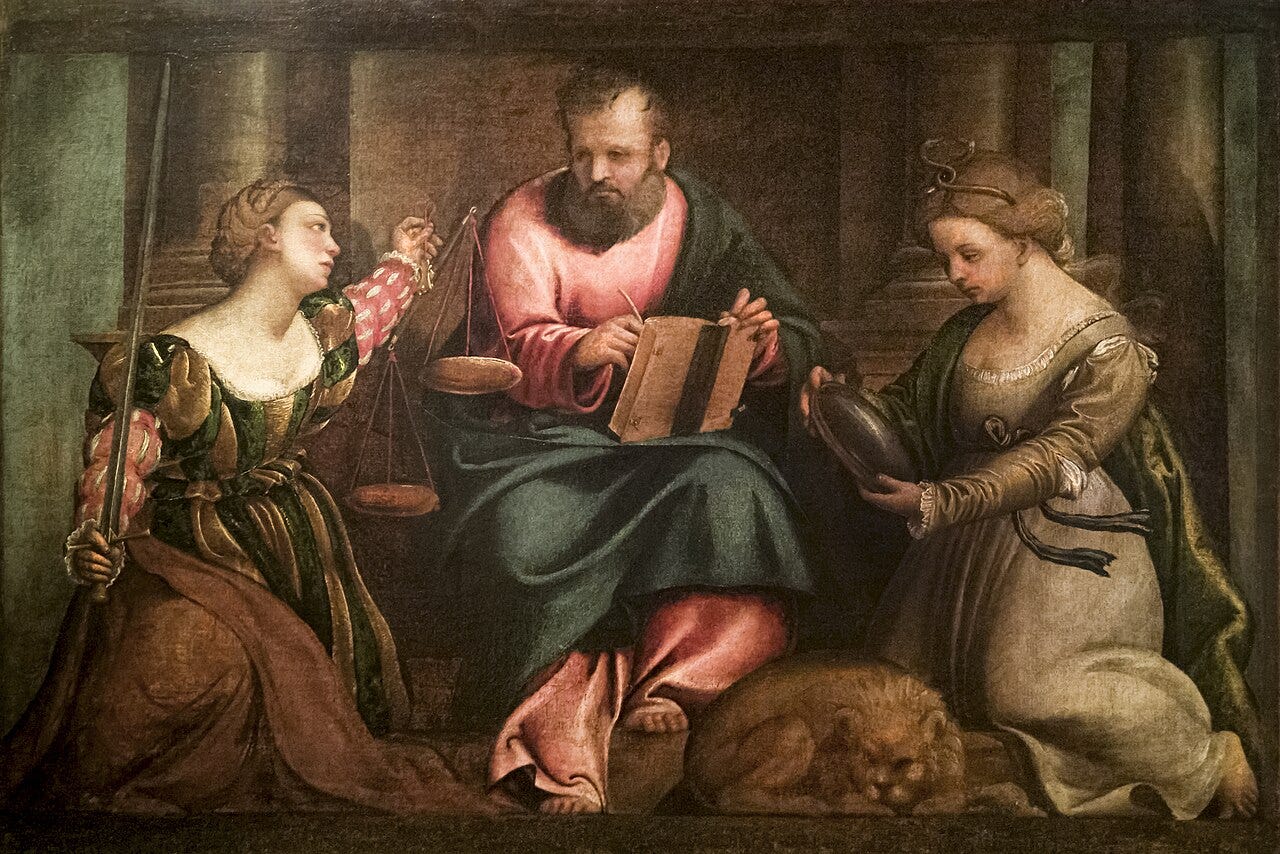
I think this is where I often tripped myself up when younger (and even still to this day). I would imagine that in the attainment of some good end I made the “wrong” decision I would be doing evil, however slight that might be. This, however, would be an incorrect reading of prudence, as prudence doesn’t deal with the end but rather with the means to that end. St. Thomas expands on this:
The proper end of each moral virtue consists precisely in conformity with right reason. For temperance intends that man should not stray from reason for the sake of his concupiscences; fortitude, that he should not stray from the right judgment of reason through fear or daring. Moreover this end is appointed to man according to natural reason, since natural reason dictates to each one that he should act according to reason.
But it belongs to the ruling of prudence to decide in what manner and by what means man shall obtain the mean of reason in his deeds. For though the attainment of the mean is the end of a moral virtue, yet this mean is found by the right disposition of these things that are directed to the end. (St. Thomas Aquinas, ST, 2.2., Q. 47, A. 7)
This doesn’t mean that one cannot be imprudent, but it does mean that if one is seeking after a virtuous end by a virtuous means then there is no question of sin attached.
Prudence, Aquinas relates elsewhere, also has an art to it, which means that as one develops in prudence the more it becomes habituated in that person and thus becomes easier. That doesn’t necessarily mean one will always make the best decision but it does mean that one can have more confidence in discerning and then deciding. This is naturally accompanied by an increase in the habituation of the other virtues, and the more one comes to understand them experientially the more “familiar” they become and thus the means to them easier to know and put into practice.

Unlike my younger misunderstandings, prudence is a virtue of action, and like any action must be practiced to become proficient at it. The more we flex our prudential muscles, as it were, the stronger they become and the more confidence we can have even in the midst of very difficult decisions. As the Proverbs say:
Have confidence in the Lord with all thy heart, and lean not upon thy own prudence. (Proverbs 3:5 DR)
In this verse the Psalmist asks for guidance from the Lord because of being oppressed by his enemies. He desires to know the way to go, to be led through the midst of immense difficulty. St. Augustine sees in this an allegory of the soul’s journey towards perfection:
He has here sufficiently plainly declared that he is on his onward road, that is, in progress toward perfection, not yet in perfection itself, when he desires eagerly that he may be led forth. (St. Augustine, Expositions on the Psalms, 5, 10.)
This justice the Psalmist speaks of is not that of a worldly sense, but of a higher one which God directs in his good will. The enemies which surround the Psalmist seem to be able to what they will in respect to injustice, and often God seems not to care by not smiting them immediately. But he recognizes that sin and injustice is its own injustice and bears its own penalty. The Psalmist wishes to be directed by God, the same who directs the evil to their destruction through their sin:
But, in Your justice, not in that which seems so to men. For to return evil for evil seems justice: but it is not His justice of whom it is said, He makes His sun to rise on the good and on the evil: for even when God punishes sinners, He does not inflict His evil on them, but leaves them to their own evil...
When then God punishes, He punishes as a judge those that transgress the law, not by bringing evil upon them from Himself, but driving them on to that which they have chosen, to fill up the sum of their misery. But man, when he returns evil for evil, does it with an evil will: and on this account is himself first evil, when he would punish evil. (ibid.)
The soul which progresses towards perfection does not account the world or its judgment but trusts wholly in God, trusting in God’s judgment, seeking to be prudent in his choices and leaving the rest to the Almighty:
Nothing is clearer, than that he here sets forth that time, in which he is journeying onward. For this is a way which is traversed not in any regions of the earth, but in the affections of the heart. In Your sight, he says, direct my way: that is, where no man sees; who are not to be trusted in their praise or blame. For they can in no wise judge of another man's conscience, wherein the way toward God is traversed. (ibid.)
This .gif came about a bit randomly. I was thinking along the lines of journeying and how sometimes that journey can seem unclear until all the pieces come into place, and I happened to see an instance of those old slide puzzles. I thought that would make a great metaphor for this verse.
The hardest part was determining how to pull this of without a lot of tedium, and within 5 seconds. I did a bit of research and found that the mathematically smallest number of moves for a puzzle like this was 35, which comes out to only a few frames per move. I guess I could have spent a lot of time determining the configuration for the puzzle start and then the moves, but instead I was lazy and just looked up a site that has all this information.
I began by placing the image into the main composition and then drew a rectangle that would perfect make a 4x4 square. Since I was working with a 2160x2160 comp, this came out to 540x540. I then used a variety of anchor point changes on the duplicates to precisely position them in a grid.
Next I duplicated the image 16 times and matted them to each individual rectangle, being sure to maintain the correct positions. Then I pre-comped each group of image and rectangle and added a temporary number so I could easily know which box what which.
After this I used AutoCrop 3 (which was a life-saver!) to constrain the boxes to the bounds of the matte and then centered the anchor points on each precomp.
I then used the website listed above to place the squares in the starting positions necessary to be able to complete it in 35 moves. I then added some position keyframes and went through and animated the squares in the move order listed to solve the puzzle in 35 moves.
Finally I disabled the temporary numbers, did some offsetting of the moves to keep within the allotted time, did some scaling and color correction and it was done. I used some layer styles on the boxes both for depth and to fix a sub-pixel gap between the boxes. All in all pretty fun to bring to fruition.
Enjoy.
Conduct me, O Lord, in thy justice:
because of my enemies, direct my way in thy sight.
(Psalm 5:9 DR)

View a higher quality version of this gif here: