

Psalm 72:5
come and lay your burdens down
They are not in the labour of men: neither shall they be scourged like other men. (Psalm 72:5 DR)
As this Psalm of lamentation continues, the Psalmist amplifies his stupefaction from the previous verse, noting that the wicked do not seem to suffer in this life as the righteous do, but rather have it relatively easy. Their great prosperity immunizes them from much of the common suffering of humanity, and gives them the ability to weather many of life’s storms. In this respect they are unlike the righteous who seem to suffer for their trouble, fleshing out the maxim that no good deed goes unpunished.
However, there is a twist here which is embedded in the Psalmist’s words. For while it is true that they do not seem to suffer like other men, this is also a double-edged sword, for—as we saw with the parable of the rich fool—this comfort from trouble can lead to the loss of one’s soul.
Jesus tells another famous parable concerning the rich man and the beggar Lazarus, the latter receiving nothing from the rich man who hoards his wealth and has no compassion on Lazarus. Both die, Lazarus going to Abraham’s bosom where he is comforted whereas the rich man (Dives, as he is traditionally called) is cast into hell. In the midst of his torments he cries out to Abraham for relief, but is given the following reply:
Son, remember that thou didst receive good things in thy lifetime, and likewise Lazareth evil things, but now he is comforted; and thou art tormented. (Luke 16:25 DR)
This dovetails perfectly with the Psalmist’s words, for indeed, the rich man was not in the labour of men nor was he scourged like other men. In his life he did avail himself of the sanctification that can flow forth from suffering, instead filling himself with sin and comforts, with the end result that in a twist of irony he is now the one who is scourged unlike other men. His rejection and refusal of suffering in this life ensured it in the next.
The great irony for us all is that the very suffering and trouble and tribulation that we bristle against is one of the means which God uses to purify and save us from sin. After all, it was suffering and death which our Lord underwent for our salvation, and thus when we participate in His sufferings we likewise have a share in His resurrection. The Psalmist looks at the seeming ease of life of the wicked and begins to lose heart, but the opposite is actually the truth; when we suffer we should rejoice, for it is God’s means of bringing us into His friendship, of purifying us from sin. The scourges that we receive in this life are—insofar as we embrace them for His sake—the proof of our sonship. St. Paul thus does not use the term chastise in vain:
My son, neglect not the discipline of the Lord; neither be thou wearied whilst thou art rebuked by him. For whom the Lord loveth, he chastiseth; and he scourgeth every son whom he receiveth. Persevere under discipline. God dealeth with you as with his sons; for what son is there, whom the father doth not correct? But if you be without chastisement, whereof all are made partakers, then are you bastards, and not sons. (Hebrews 12:5-8 DR)
The rich man of Jesus’ parable did not suffer this form of chastisement, which led to his eternal ruin. Instead of accepting the Lord’s discipline and allowing that to transform his heart, he allowed the comfort his wealth provided to consume his heart, which posed an insurmountable obstacle to grace. The scourging he refused in this life he ends up suffering forever.
On the contrary, the sufferings of this life and the chastisements we receive for the sake of righteousness are to be accepted with gladness. They are, in view of eternity, light and momentary. It is for this reason that our Lord says:
Come to me, all you that labour, and are burdened, and I will refresh you. Take up my yoke upon you, and learn of me, because I am meek, and humble of heart: and you shall find rest to your souls. For my yoke is sweet and my burden light. (Matthew 11:28-30 DR)
For this animation I wanted to play around with a new-ish plugin that uses machine-learning to create transitions between images. It also has a funny name: I Ate Mushrooms. The plugin allows you to create multiple sources and then choose the blending between them, which can create some rather interesting transitions. Couple this with the ability to add in Noise parameters and to multiply the sources and noise and you can create some frenetic animations.
I chose a source that is a series of landscape images, and I believe I added in a couple sources for this. I don’t know exactly how everything works, but I modified the parameters until I found something interesting.
Enjoy.
They are not in the labour of men: neither shall they be scourged like other men.
(Psalm 72:5 DR)
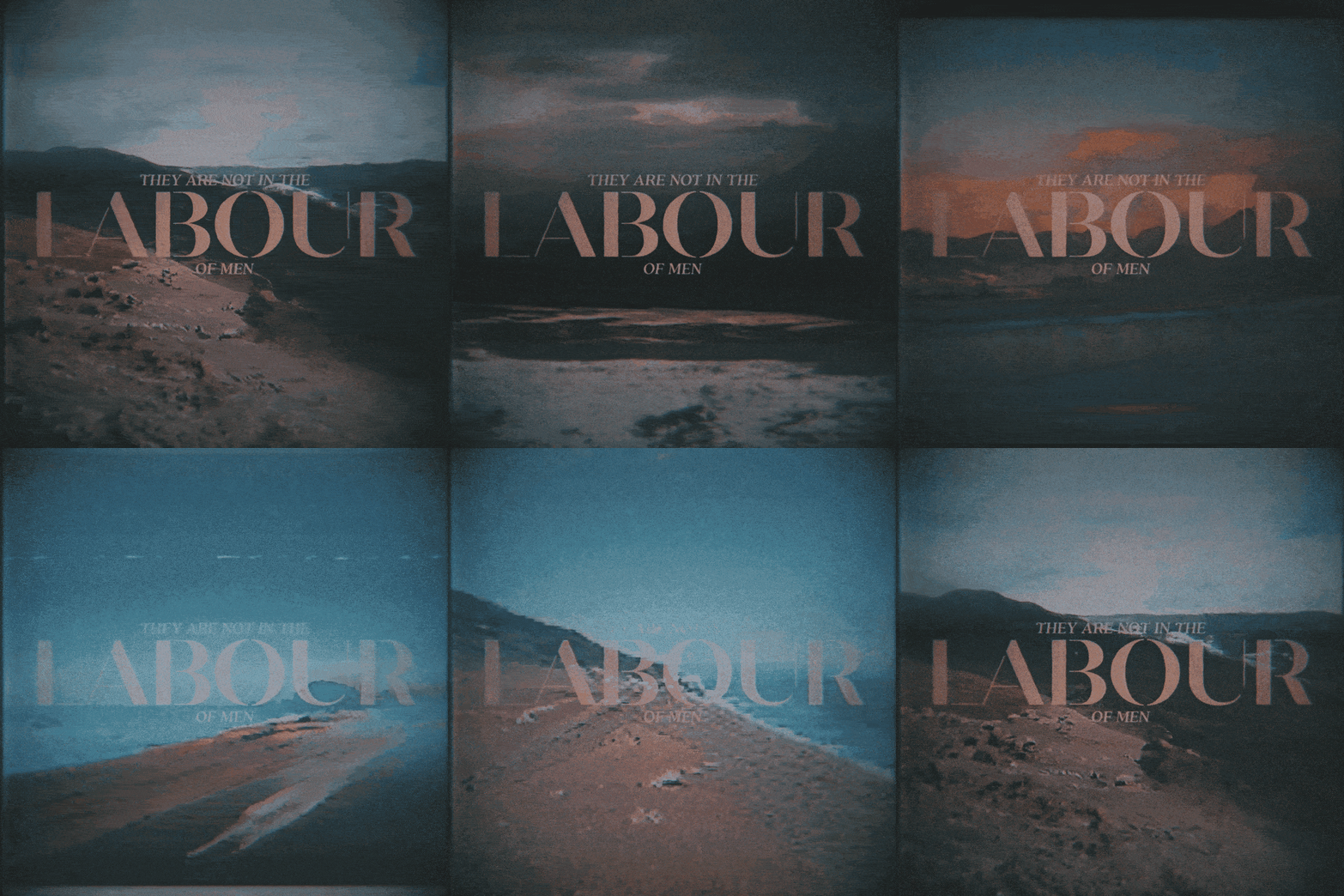
View a higher quality version of this gif here: