

Psalm 72:7
the motive of iniquity
Their iniquity hath come forth, as it were from fatness: they have passed into the affection of the heart. (Psalm 72:7 DR)
Th motives we have for what we do—either for good or for ill—are crucial, for not only do they give context and character to the action, but also provide the compelling reason for doing it. This can be seen even from the etymological origins of the term motive, which comes from the Latin movere—that is, moving or impelling. The motive thus becomes that which directs and moves us toward the outcome of the action, the desired result, as it were. The same action can thus be either good or ill dependent on the motive behind it.
This motive does not operate in a vacuum but is influenced by other motives and other actions and can even take on a habitual character. The more we do something the easier it becomes to do and the more that action commends itself to our motivation. Something good like exercising is good in the abstract but is difficult to get into. Finding the motivation in the face of the arduous nature of it can difficult. But the more habitual it becomes the easier it becomes to choose, especially if it brings about the desired results. And if you surround yourself friends who engage in similar activities and avoid things that run against its promised outcomes, the more this motivation becomes second nature and the ensuing action an acquired habit.
As the Psalmist considers the lot of the wicked in their prosperity, he begins to notice that their wickedness is not just something they choose arbitrarily but is conditioned to some extent on their great wealth and prosperity. They probably didn’t wake up one day and decide to be wicked; rather, it was a series of choices over years coupled with success from those evil choices that not only habituates the vice but increases it. And since the wickedness is so closely correlated with the prosperity, the more the prosperity increases, so does the vice. A vicious cycle ensues.
St. Augustine remarks that vice can arise for both the poor and the rich, and both out of a similar yet contrary circumstance:
A poor beggar commits a theft; out of leanness has gone forth the iniquity: but when a rich man abounds in so many things, why does he plunder the things of others? Of the former the iniquity out of leanness, of the other out of fatness, has gone forth. (St. Augustine, Expositions on the Psalms, 72, 10.)
In the case of the poor man who steals it is need that compels him. But in the case of the rich it is not need in the same sense but rather in a deeper sense; the more he has the more he considers he deserves and thus is entitled to:
Thus, Achab took away Naboth’s vineyard, not because he wanted it, but because it bounded his palace. And that the wealth of this world, when not shared with our needy neighbors, is the cause of much wickedness, we read in Ezechiel 16, where he says, “Behold, this was the iniquity of Sodom;” that is, the iniquity that brought fire from heaven on it, “Pride, fullness of bread, and abundance, and the idleness of her and of her daughters: and they did not put forth their hand to the needy and to the poor. And they were lifted up, and committed abominations before me, and I took them away, as thou hast seen.” (St. Robert Bellarmine, A Commentary on the Psalms, 72, 7.)
The horrifying aspect of this is that the wicked thus desire to possess more things not because they want them or think they will make them happy, but simply because the need itself has overtaken them and compels them to acquire. They thus commit wickedness not even for the benefit of themselves but rather to scratch the itch, as it were, of the vice to which they have been habituated.
This is what the Psalmist describes when he says they have “passed into the affection of the heart.” St. Bellarmine considers this a difficult passage, but offers his opinion that it is speaking to this itch that has so consumed the person that they have been given over to it. He compares it to someone who desires a woman not for herself but rather for his idea of her.
So it is with other sins and vices. As they become habituated in us, and as we create the situations on which that vice is fed and encouraged, so the motive power of that vice takes control so that we desire the vice for its own sake, rather than good which it originally perverts; our thoughts and affections become one and the same:
My opinion is, that “passing into the affection of the heart” means to be so transformed and possessed by carnal desires that the whole man becomes animal; as St. Paul says, when “God gave them up to the desires of their heart;” and in the end of the same chapter where he says, “For this cause God delivered them up to shameful affections,” Rom. 1; for the thoughts and the affections are most united, and taken for the same.
[T]hus, the sinners, in the abundance of the goods of this life, “passed into the affection,” and thoughts, and pictures of their own heart, because they have devoted themselves entirely to the creations and the concupiscences of their hearts. (ibid.)
This is precisely why prosperity can be a great danger, and why the Scriptures constantly warn against placing one’s hope or trust in wealth or abundance. We can too easily give ourselves over to them, and in our abundance start to excuse our actions because we seem to suffer no harm but perhaps even increase in seemingly good things. And much like a repeated action becomes habituated, the more we desire the world, the flesh and the devil the more we become used to them until they begin to make use of us.
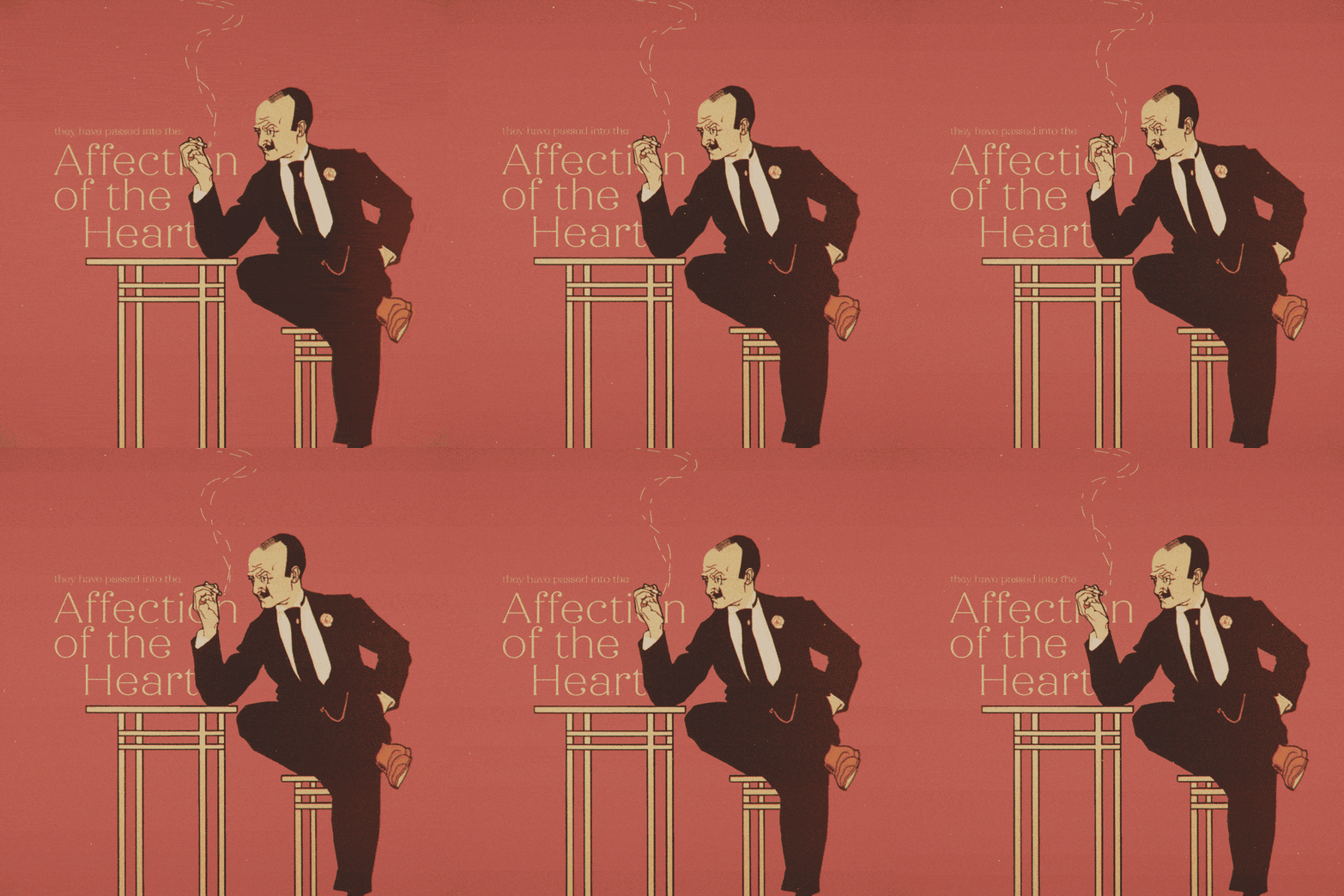
This animation came about a bit by accident as I was searching through the public domain archives of Wikimedia Commons. I was looking for vintage illustrations of men in suits and found some rather remarkable old cigarette ads. Most of them were attempting to give a sense of luxury, usually with men in tuxedos and women in evening gowns. Unlike ads today where “cool” is generally framed in terms of youth and urban culture, these vintage ads framed cool in terms of fashion and wealth, like being part of an exclusive club. Needless to say they would never work today, but it is an fascinating insight into marketing from previous eras.
At any rate, I found this ad with this well-dressed man at a bistro—replete with monocle—eyeing his cigarette with a sense of collected and confident cool.
I cut it out in photoshop and rigged the character up in After Effects with the Puppet Tool. I gave him just a bit of sway, keeping it very subdued to fit the overall character of the illustration. I finally drew a stroked line for the smoke trails and animated the offset.
Enjoy.
Their iniquity hath come forth, as it were from fatness:
they have passed into the affection of the heart.
(Psalm 72:7 DR)
View a higher quality version of this gif here: