

Psalm 76:17
confession is good for the soul
The waters saw thee, O God, the waters saw thee: and they were afraid, and the depths were troubled. (Psalm 76:17 DR)
As the Psalmist continues to recount the saving acts of God throughout the history of his people, he alludes to one of the more dramatic instances in the parting of the Red Sea, by which the Lord not only saved his people from bondage in Egypt but also humbled and destroyed their oppressors who sought to bring them back into slavery. This act would loom large in the collective consciousness of the Israelites, which is why the Psalmist employs it as a microcosm of all of God’s merciful dealings with his people.
The historical context—as real as it is—also hold beneath it a deeper spiritual significance, as the waters are not merely a literal reference but throughout Scripture tend to stand for the nations or the peoples of the earth. The poetic parallelism not only is a way to describe the people of God walking on dry land, but of his complete salvation to them from their enemies. And whenever we speak of enemies in the spiritual sense, we move into the realm of virtue and sin.
St. Augustine notes in this verse an allusion to the conscience of man, which when troubled is like disturbed waters:
But above he had said, “You have made known in the peoples Your virtue.” With reason therefore, “the waters have seen You, and they have feared.” They have been changed because they have feared. What are the abysses? The depths of waters. What man among the peoples is not troubled, when the conscience is smitten? You seek the depth of the sea, what is deeper than human conscience? That is the depth which was troubled, when God redeemed with His arm His people. In what manner were the abysses troubled? When all men poured forth their consciences in confession. (St. Augustine, Expositions on the Psalms, 76, 17.)
The sense is thus that when the guilty conscience in confronted by God’s saving acts, it is pricked and troubled. At this point there is a moment of decision—will the troubled conscience lead to repentance or to obstinance. In the episode of the parting of the waters that the Psalmist alludes to it was the hardening of Pharaoh’s heart in response to God’s liberation of the Israelites which led to the destruction of Pharoah’s army in the depths. Conversely, when St. Peter preaches at Pentecost about the salvific suffering of our Lord the troubling of the consciences of the people leads to repentance:
Now when they had heard these things, they had compunction in their heart, and said to Peter, and to the rest of the apostles: What shall we do, men and brethren? But Peter said to them: “Do penance, and be baptized every one of you in the name of Jesus Christ, for the remission of your sins: and you shall receive the gift of the Holy Ghost.” (Acts 2:37-38 DR)
This confession of theirs is prompted by a troubled and turbulent soul, but leads to penance which calms the choppy waters and brings the peace of forgiveness and a clean conscience. The waters thus serve as an even further figure of baptism which brings about the remission of sins, and finally of the sacrament of Penance by which any further sins are also washed away.
Confession—as they say—truly is good for the soul, for it still the raging tempest of the stricken conscience and brings peace to the one who is restored to friendship with God.
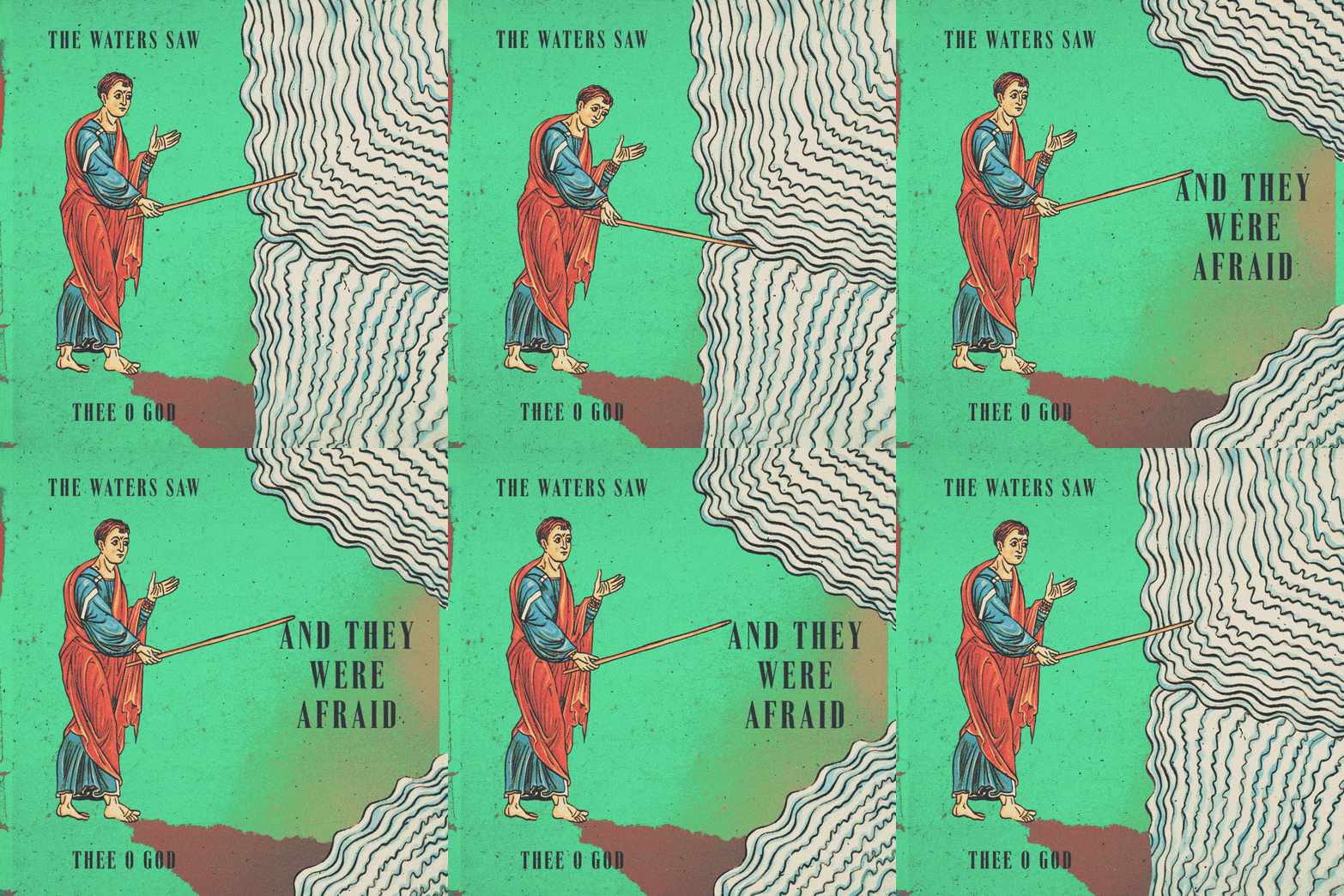
For this animation I found a great medieval miniature of Moses parting the waters, which I found fascinating in that Moses is usually depicted as an old man with a beard, but here he is clean-shaven and rather young in appearance.
At any rate, I cut out the Moses figure in Photoshop and separated the foreground arm (the one with the stick) into a separate layer, using Generative Fill (which is frighteningly impressive at times!) to fill in the missing pixels beneath the arm on the body. I did the same with the waters.
In After Effects I composited the Moses figure into a precomp and rigged the body up with the Puppet Tool and used PuppetTools 3 to link the pins to Nulls. I did the same with the Arm layer. I then parented the arm to the body control Null and animating the striking motion, complete with anticipation and overshoot.
I then animated the waters receding, as it were, after being struck, and then back again for the loop. I had some text below them to be revealed as they receded just for the final touch.
Enjoy.
The waters saw thee, O God, the waters saw thee:
and they were afraid, and the depths were troubled.
(Psalm 76:17 DR)
View a higher quality version of this gif here: