

Psalm 7:7
a most merciful vengeance
Rise up, O Lord, in thy anger: and be thou exalted in the borders of my enemies. And arise, O Lord my God, in the precept which thou hast commanded: (Psalm 7:7 DR)
Having vindicated his actions from the past, the Psalmist now moves to pleading for God to take vengeance upon his enemies who have unjustly persecuted him. An inherent tension might be superficially noticed here, for after protesting that he has not taken vengeance upon his enemies, he now asks the Lord to do so on his behalf. However, this is certainly resolved by recognizing that he is not taking the meting out of justice into his own hands; rather, as the scriptures command, he is leaving it to God’s judgment:
Revenge is mine, and I will repay them in due time, that their foot may slide: the day of destruction is at hand, and the time makes haste to come. The Lord will judge his people, and will have mercy on his servants: he shall see that their hand is weakened, and that they who were shut up have also failed, and they that remained are consumed. (Deuteronomy 32:35-36 DR)
On the spiritual level, however, there is a deeper reality, for while he prays for deliverance from his physical enemies through God’s wrathful action against them, such a prayer which rises from a pure and perfect heart does so that the sin may be eradicated and the soul loosed from the grip of the devil. In this manner God’s wrath becomes the occasion of mercy:
Why yet does he, who we say is perfect, incite God to anger? Must we not see, whether he rather be not perfect, who, when he was being stoned, said, “O Lord, lay not this sin to their charge?” [Acts 7:60] Or does the Psalmist pray thus not against men, but against the devil and his angels, whose possession sinners and the ungodly are? He then does not pray against him in wrath, but in mercy, whosoever prays that that possession may be taken from him by that Lord “who justifies the ungodly.” [Romans 4:5] For when the ungodly is justified, from ungodly he is made just, and from being the possession of the devil he passes into the temple of God. (St. Augustine, Expositions on the Psalms, 7, 5.)
In the various struggles we have against those who hate and unjustly persecute us, it is effortless in our natural state to hate them in return, to desire their ruin and pain for the pain they inflict upon us. But the Christian is called to love his enemies and pray for those who persecute him (cf. Matthew 5:44). Even after being brought into the kingdom of light we can forget that we were under the bondage of the devil and his tyranny; the same is true of those who are still far from Christ. The rite of baptism poignantly describes the translation from the kingdom of darkness to the kingdom of light (cf. Colossians 1:13-14) which occurs in the sacrament, as this example of one its many prayers demonstrates:
…Take from him all blindness of heart. Free him from the snares of Satan which until now have held him. Open to him, Lord, the gate of your mercy. Then, seasoned by the salt which is symbolic of your wisdom, may he be relieved of the corruption of evil desires; and, finding pleasure in the keeping of your commandments, may he serve you in your Church and make progress from day to day in the way of perfection.
As St. Paul reminds us, even though we are often physically oppressed by those around us (as he himself was on many occasions), our ultimate enemy is not other humans but the diabolical forces which hold them in thrall:
Put on the full armor of God, so that you can take your stand against the devil’s schemes. For our struggle is not against flesh and blood, but against the rulers, against the authorities, against the powers of this dark world and against the spiritual forces of evil in the heavenly realms. (Ephesians 6:11-12 DR)
The imprecatory prayers against are enemies thus should arise not from a desire for their hurt but for their salvation; the justice we seek is that they would be freed from the tyranny of the devil and that he would be punished in being deprived of his possessions:
And since it is a punishment that a possession, in which one longs to have rule, should be taken away from him: this punishment, that he should cease to possess those whom he now possesses, the Psalmist calls the anger of God against the devil. (St. Augustine, Expositions on the Psalms, 7, 5.)
In this manner God becomes exalted in the borders of our enemies, for the possession that once was the devil’s becomes the possession of God as they are brought to conversion and into the kingdom of light.
I liked the idea of “precept” used in the this passage and thought it had some potential for an animation. I found this great image of both a gavel and some columns which I thought spoke to the concept of justice. I cut them both out in photoshop and then brought them into After Effects. I added a bit of wiggle hold to the position and rotation of the gavel and then animated the position of the columns to frame the gavel.
I finally found this nice patterned paper (which I think was used for the inside cover of old hardback books) and used it in the center on the sides to fill out the composition a bit.
Enjoy.
Rise up, O Lord, in thy anger: and be thou exalted in the borders of my enemies. And arise, O Lord my God, in the precept which thou hast commanded:
(Psalm 7:7 DR)
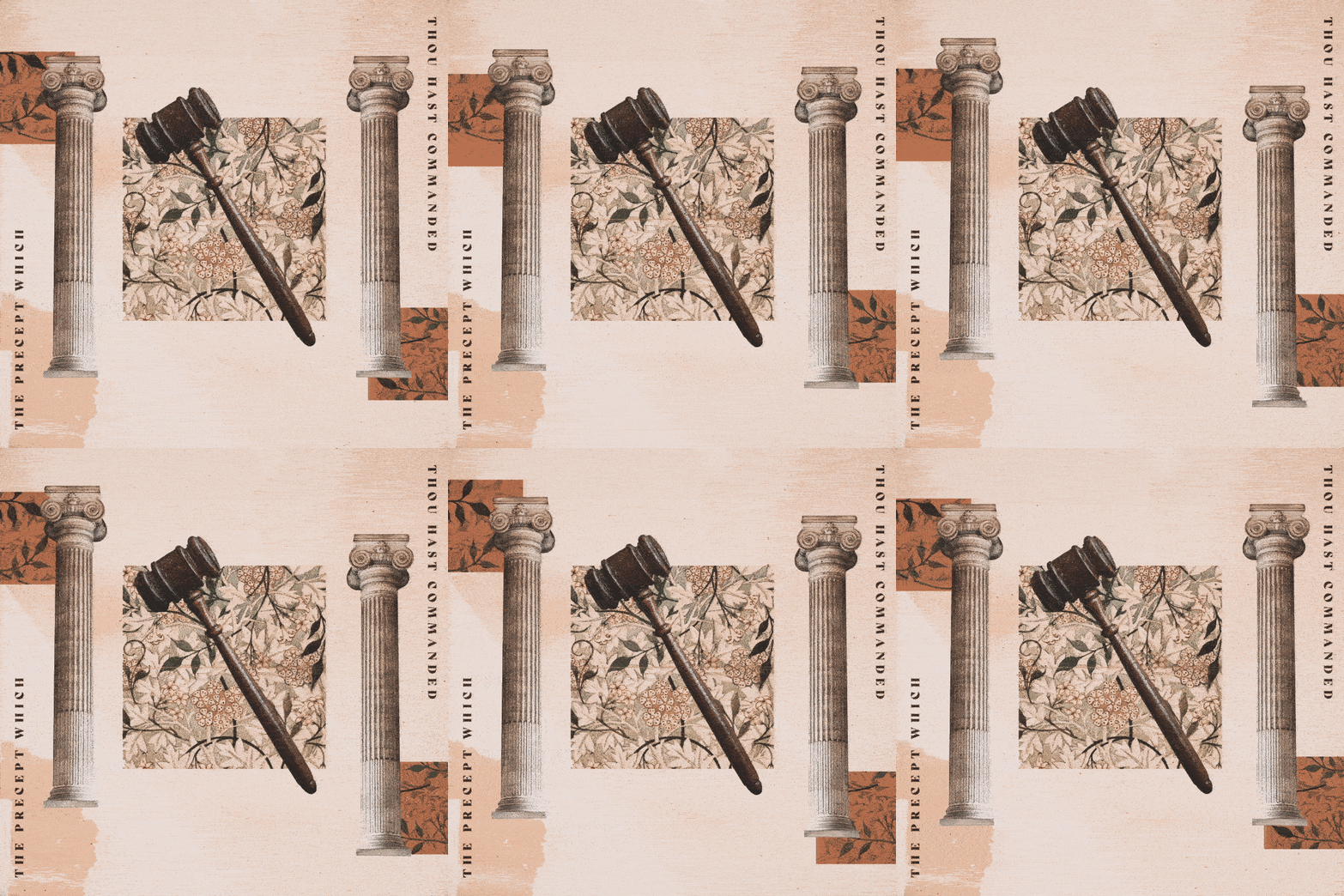
View a higher quality version of this gif here: