

Psalm 90:13
a chicken-headed snake thing
Thou shalt walk upon the asp and the basilisk: and thou shalt trample under foot the lion and the dragon. (Psalm 90:13 DR)
At the beginning of this Psalm St. Augustine noted that this is the Psalm which the devil used to tempt Christ, and thus is a fitting study for avoiding temptation. There is also the historical aspect in which this Psalm was traditionally said every night at Compline as part of the Divine Office, and—fittingly for this verse—begins with a verse from 1 Peter:
Be sober and watch: because your adversary the devil, as a roaring lion, goeth about seeking whom he may devour. Whom resist ye, strong in faith… (1 Peter 5:8-9 DR)
Having spoken of how God commands his angels to protect the righteous, the Psalmist now moves to the infernal angels, those fallen ones whose intent is to lead souls into sin and capture them in vice. The figures used here are common ones throughout the Scriptures, and draw out various ploys and tactics that the devil uses to tempt and assail us:
He calls Satan a serpent, by reason of his cunning, and a lion, by reason of his ferocity; and, as there are various sorts of serpents, he calls him an asp, a basilisk, and a dragon, for to the cunning that is common to all serpents, the asp unites obstinacy, the basilisk cruelty, and the dragon great strength and power, for all of which Satan is remarkable. This is not the only passage in which the devil is called a serpent and a lion. In Job 26, and Isaias 27, he is called “the winding snake” and “the crooked serpent.” The Apocalypse calls him “the dragon” and “the old serpent;” and St. Peter calls him “the roaring lion,” (St. Robert Bellarmine, A Commentary on the Book of the Psalms, 90, 13.)
St. Augustine goes further and draws a distinction between the lion and the dragon, for the lion stands in for outright persecution and oppression and temptation, whereas the dragon is the subtle wiles of distorted doctrine. Thus the lion rages in persecution against the martyrs and is the outward manifestation of the devil’s deceit, whereas the twisting of Scripture and the perversion of the Church’s teaching by the heretics is the more hidden and deceptive working of the evil one against Christians.
In the former assault the fears of the body such as pain, reputation, etc., are at play, whereas in the latter things such as pride are the focus of the devil’s attack. We can thus be led into temptation both overtly by what is presented to our senses and discretely by thoughts and doubts and other such inward predilections. We must remain vigilant that we be neither crushed nor deceived:
The lion openly rages, the dragon lies secretly in covert: the devil has each of these forces and powers. When the Martyrs were being slain, it was the raging lion: when heretics are plotting, it is the dragon creeping beneath us. You have conquered the lion; conquer also the dragon: the lion has not crushed you, let not the dragon deceive you... (St. Augustine, Exposition on the Psalms, 90, 17.)
The hope that the Psalmist intones is that God has promised assistance to trample underfoot these temptations, no matter what source or form they take. We are not left to our own devices, but rather are urged—as the Psalm begins—to dwell in the aid of the Most High. All the promises of this Psalm, all the hope that the Psalmist has flow from this wellspring. The foot that crushes the head of basilisk is that of the Church not because of anything it is, but because it is the body of Christ, the one whom was foretold to crush the head of the ancient serpent. The dual-interpretation of the Blessed Virgin crushing his head is thus fitting as she is Mother of the Church, and thus typologically signifies and actualizes this promise not only for herself but also for all those who dwell in the aid of the most High.
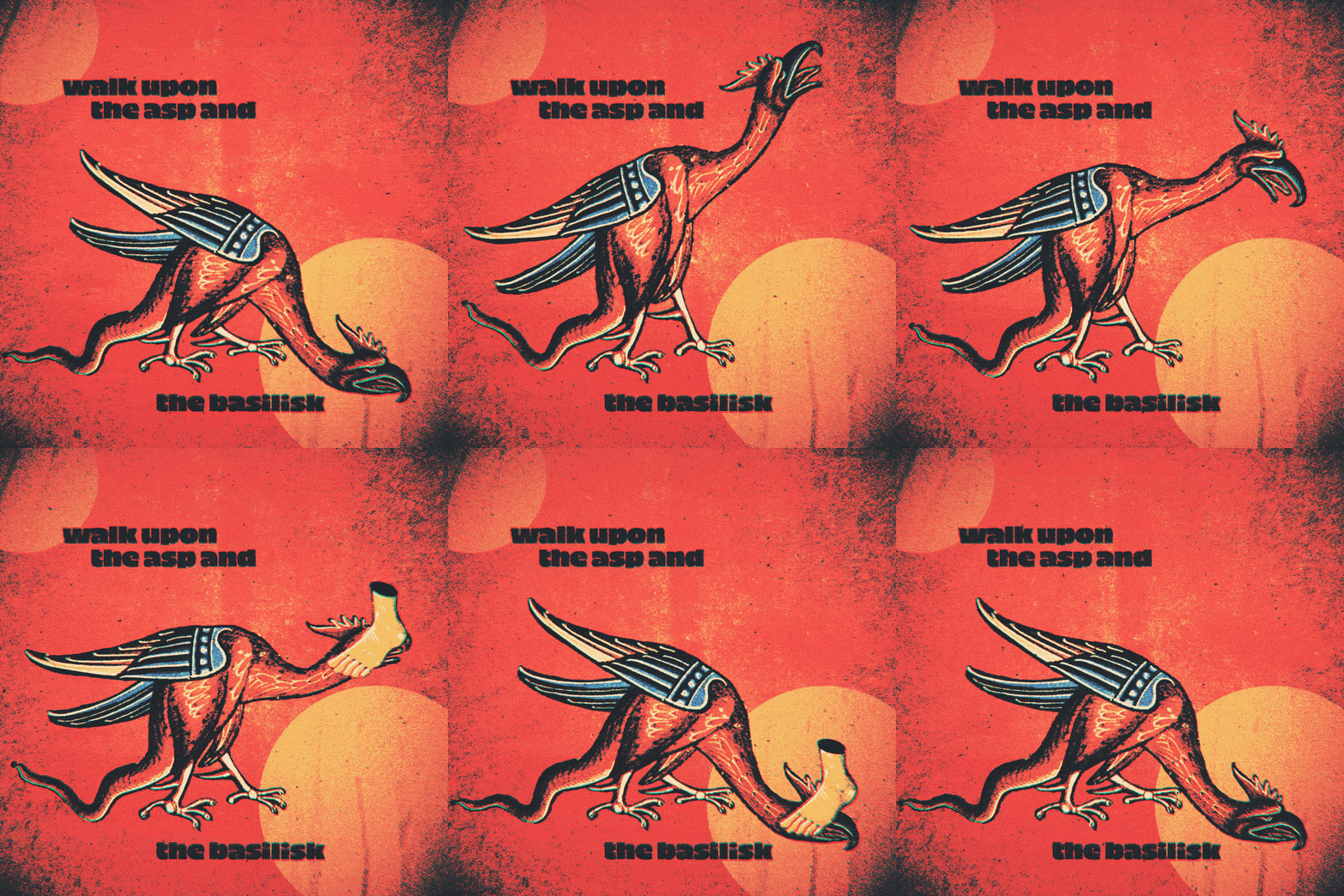
This animation ended up being very literal, which can sometimes be pretty fun.
The image of the basilisk comes from the medieval bestiary of Aberdeen. As a side note, I find the medieval bestiaries fascinating and always a great source of imagery for these types of things, as the artists were both imaginative and talented in their depictions. One could of course argue that they aren’t always true to the forms of the animals they depict, but that seems to me a somewhat modern conceit.
That being said, in the original the basilisk is being attacked by a weasel or mongoose, which makes sense as mongooses (mongeese?) are a natural predator of serpents. The basilisk is in some cases purported to be a cross between a snake and a rooster, which is why they are often depicted as having wings, feet, the rooster’s crown, etc., as well as serpentine features. Some speculate the hooded cobra is the source of the ancient conception of the basilisk.
At any rate, I cutout the basilisk in the Photoshop and removed the weasel (much to the basilisk’s gratitude, I would imagine…). I also found a foot image from another medieval miniature and isolated it.
In After Effects I composited everything in a new composition and rigged up the basilisk with the Puppet Tool, using PuppetTools 3 to link the pins to Nulls. I then animated the foot stomping on the head of the basilisk, with a final step for good measure. All that is just a matter of timing to get the feel and weight right.
Enjoy.
Thou shalt walk upon the asp and the basilisk:
and thou shalt trample under foot the lion and the dragon.
(Psalm 90:13 DR)
View a higher quality version of this gif here: