

Deliver me not over to the will of them that trouble me; for unjust witnesses have risen up against me; and iniquity hath lied to itself. (Psalm 26:12 DR)
There is perhaps nothing as deceptive as the lies we tell ourselves. Whether to avoid an uncomfortable truth or to steel our resolve so as to face a foreseen difficulty, we are masters at self-deception. And the worst part is when we start to believe our own propaganda, as opposed to some feigned belief that is convenient in the moment. We can begin to love the lie, to make the lie the point, to fold our intellect and will into an untruth that then becomes too seemingly self-evident to deny.
The temptation to self-deception can come from within, but also from without, either through the deceit of the devil or of his willing ministers through the machinations of men. We are never immune from its allure, for the intellect seeks truth but the will seeks its desires, and it can be easy to substitute a perceived good for the real thing. The assaults of the world, the flesh and the devil can also create a pressure-cooker of self-doubt, in which amidst the insanity of a surrounding world it can be difficult to maintain one’s sanity, as the world is happy to whisper doubts to the contrary—maybe you are the one who is insane. And as the Scriptures declare, the very desire to live uprightly will prompt such reactions from those who love this world:
Let us therefore lie in wait for the just, because he is not for our turn, and he is contrary to our doings, and upbraideth us with transgressions of the law, and divulgeth against us the sins of our way of life. He boasteth that he hath the knowledge of God, and calleth himself the son of God. He is become a censurer of our thoughts. He is grievous unto us, even to behold: for his life is not like other men’s, and his ways are very different. We are esteemed by him as triflers, and he abstaineth from our ways as from filthiness, and he preferreth the latter end of the just, and glorieth that he hath God for his father. Let us see then if his words be true, and let us prove what shall happen to him, and we shall know what his end shall be. (Wisdom 2:13-17 DR)

The Psalmist—having had himself set in the way of the Lord so as to walk in His commandments and justice—now feels the sting of the arrows from the lovers of this world and its pleasures. They do not suddenly applaud him for his righteousness nor pat him on the back for pursuing holiness. On the contrary, his desire for God’s law is offensive to them, for it holds up to scorn their law, in that they have becomes a law unto themselves that they may pursue their evil desires. His very existence and desire for the law of the Lord is thus intolerable, and they must defeat him, either through persecution or—even better—by convincing him to abandon the precepts of the Lord:
Deliver me not up unto the souls of them that trouble me. Suffer not them that trouble me to be satiated with my evils. For unrighteous witnesses have risen up against me. For there have risen up against me they that speak falsely of me, to remove and call me back from You, as if I seek glory of men. (St. Augustine, Expositions on the Psalms, 26, Exposition 1, 12)
The Psalmist’s enemies wish to call him back from this new-found desire for uprightness, to come back and join them in their iniquities and the seeking after of their pleasures. The unjust witnesses seek to use whatever means necessary—even outright lies and calumny—to secure his defeat and destruction. Such temptations are ever present and press upon the soul that either through allure or through threat they might find some hook in his soul to drag him back into their ways. For while the injustice of their witness need not—on the moral level—trouble the upright man, it is nevertheless a testing of his patience as he awaits his vindication from the Lord:
Deliver me not up unto the souls of them that trouble me: that is, let me not consent to them that trouble me. For if thou shalt consent to him that troubleth thee, unto his soul, he will not, so to say, devour thy flesh, but by a perverted will he will eat up thy soul. Deliver me not up unto the souls of them that trouble me. Deliver me, if it please Thee, into the hands of them that trouble me. For this Martyrs have said to Him, and He hath delivered His own into the hands of them that trouble them. But what hath He delivered? The flesh. Which is meant in the book of Job, The earth hath been delivered into the hands of the wicked (Job 9:24); the flesh hath been delivered into the hands of the persecutor. Deliver me not up, not my flesh, but me. I speak unto Thee as a soul, as mind I speak unto Thee: I do not say, Deliver not up my flesh into the hands of them that trouble me; but, Deliver me not up unto the souls of them that trouble me. (St. Augustine, Expositions on the Psalms, 26, Exposition 2, 21)
The Latin here of animas tribulantium me delves into the motivation of the Psalmist’s enemies. The Douay-Rheims renders animas as will, which is looking at the property of the soul—that is the will—rather than the soul as a whole. The Septuagint has ψυχὰς, from ψυχή, soul, and St. Augustine takes this as an opportunity to explore the distinction of the flesh being handed over to the wicked, as in the case of the martyrs, as opposed to their souls being subjected to the desire or will or souls of the wicked. The prayer of the Psalmist is that his soul—which desires that one thing, to dwell in the tabernacle of the Lord—would not be given over to their souls, who also desire one thing, to satisfy the lusts of the flesh and to love the goods of this world.


The Psalmist thus fears not for the needs of his body or what terrors and pains may await it; he fears far more that he would fall away from the right path, that he would join them again in their wickedness. His prayer focuses on this specifically because the unjust witnesses have told their lies, and iniquity hath lied to itself.
There is certainly a prophetic aspect of this passage in reference to our Lord Who was accused by unjust witnesses to secure his condemnation. They rose up against Him, but even then their lies were contradictory and the witnesses could not agree. Aquila’s redaction of the Septuagint says: False witnesses objected, and injustice was unmasked. Lies have a a tendency of refuting and unmasking themselves, for they cannot bear their own weight and eventually are caught in the inconsistencies that they require to be believable. Yet even though this was evidence of the untruth of the accusations, Jesus’ enemies still sought his destruction and thus lied to themselves, believing the lies that were told about Him. Even if it was only a convenient belief to secure His condemnation, it hardened their hearts against the truth, and the lie became the point.
For the Psalmist, the lies that iniquity tells itself may be obvious at the moment, but the danger is that his soul will be lured into giving itself over to their souls, to their wills, which is based in a lie rather than in the truth in which he now walks. The temptation to believe the lie—especially the lies we tell ourselves—is an ever-present temptation, for it plays to our comforts and desires, our want to be honored in this world or before men, our desire for the goods and pleasures of this world that occlude the vision of God.
But in cooperation with God’s grace such lies can be defeated, and the liar will end up being unmasked and will have only lied to himself. For even the devil—whose intellect far surpasses our own—is himself deceived by the lie he will tell himself forever, refusing to see the truth which now—instead of enlightening the eyes of those who see it—burns with scorching pain those who love their own lies and in their iniquity lie to themselves:
Now, for that there are unrighteous witnesses, and they speak much evil against me, and in many things defame me, if I shall have been delivered up unto their souls, I also shall lie, and shall be their companion, not a partaker of Thy truth, but a partaker with them in a lie against Thee: Unrighteous witnesses have risen up against me; and iniquity hath lied unto itself: unto itself, and not unto me: unto itself let it ever lie, but let it not lie unto me. If Thou shalt have delivered me up unto the souls of them that trouble me, that is, if I shall have consented to their wishes; now will not iniquity already have lied unto itself, but unto me also: whereas if they exercise against me all the violence they wish, and endeavour to hinder my free course, and notwithstanding Thou give me not over unto their souls: by not consenting to their wishes, I shall abide and continue in Thy truth, and iniquity will lie not unto me, but unto itself. (St. Augustine, Expositions on the Psalms, 26, Exposition 2, 21)
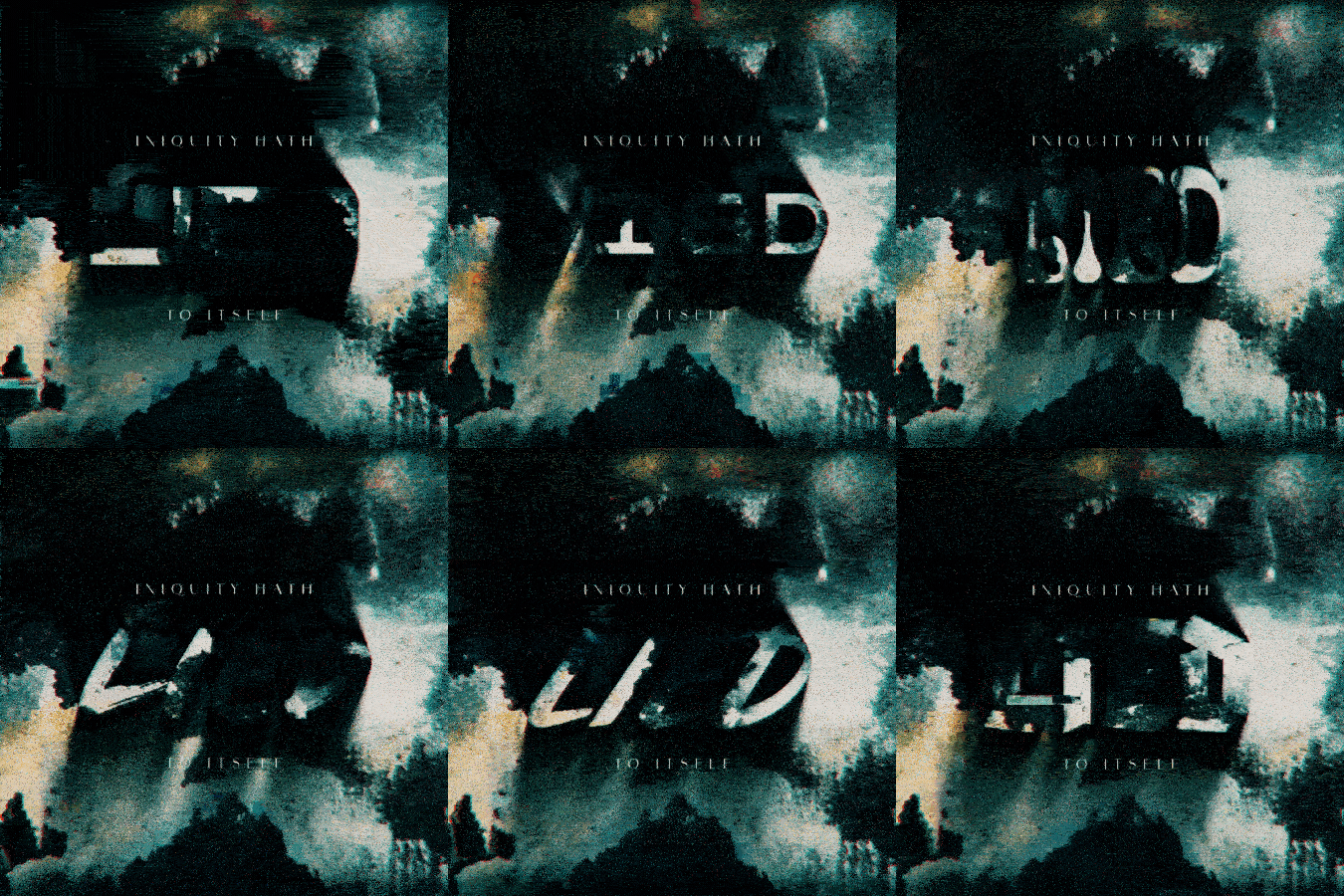
I created a precomp and placed many different versions of the “lied” text in there using distinct fonts and then sequenced them to create that animation. In the main composition I applied Shadow Studio 3 for the shadow.
I added in a background texture and added some slight wiggle hold, and then created an adjustment layer to which I applied pixel sorting. It already is based on the changing pixels, but I also randomly seeded the angle of the pixel sorting result every six frames for a little more frenetic motion.
I finally added in some glitch effects, camera shake, noise and color correction.
Enjoy.
Deliver me not over to the will of them that trouble me; for unjust witnesses have risen up against me; and iniquity hath lied to itself.
(Psalm 26:12 DR)
View a higher quality version of this gif here:


